
Best Non-Surgical Regenerative Spinal Therapy for Lasting Chronic Back Pain Relief in 2026
Why Chronic Spinal Pain Demands a Smarter, Non-Surgical Approach
Chronic back pain rarely has a single cause. It is usually a tangle of disc degeneration, nerve irritation, muscle compensation, inflammation, and metabolic dysfunction that has built up over years. Standard treatment paths often respond to one piece of that puzzle at a time, which is why so many patients cycle between painkillers, injections, and physical therapy without lasting relief.
Surgery carries its own risks. Spinal fusion can shift stress to adjacent discs, and revision rates remain stubbornly high. Long-term opioid use brings dependency, cognitive fog, and gastrointestinal issues. Neither addresses the underlying biology of why tissue is breaking down in the first place.
Non-surgical regenerative spinal therapy takes a different position: stimulate the body’s own repair mechanisms, decompress the structures that are failing, and correct the lifestyle and metabolic drivers feeding inflammation. The result is durable improvement rather than temporary symptom suppression.
What to do next: If you have had back pain for more than three months, ask whether your current plan is treating symptoms or rebuilding tissue. The answer should guide your next move.
What to Look for in a Regenerative Spinal Therapy Provider
Not every clinic offering “regenerative” care delivers the same depth of evaluation or treatment. Before committing to a program, look for these markers of a serious provider:
- A whole-body evaluation, not just an MRI review. Spinal pain is often driven by metabolic inflammation, blood sugar instability, or postural patterns that imaging cannot reveal.
- Both MD and chiropractic expertise under one roof. This avoids the fragmented care that leaves patients translating between specialists.
- Diagnostic-led treatment plans. Avoid clinics that recommend the same protocol to every patient.
- Clear outcome tracking. Pain scales, function tests, and follow-up imaging should be part of the conversation.
- Functional medicine integration for conditions like Type II diabetes, which directly impact nerve and disc health.
A red flag: any provider who promises a fix without examining how you move, what you eat, and how your nervous system is functioning.
Key Criteria We Used to Evaluate Effective Spinal Therapies
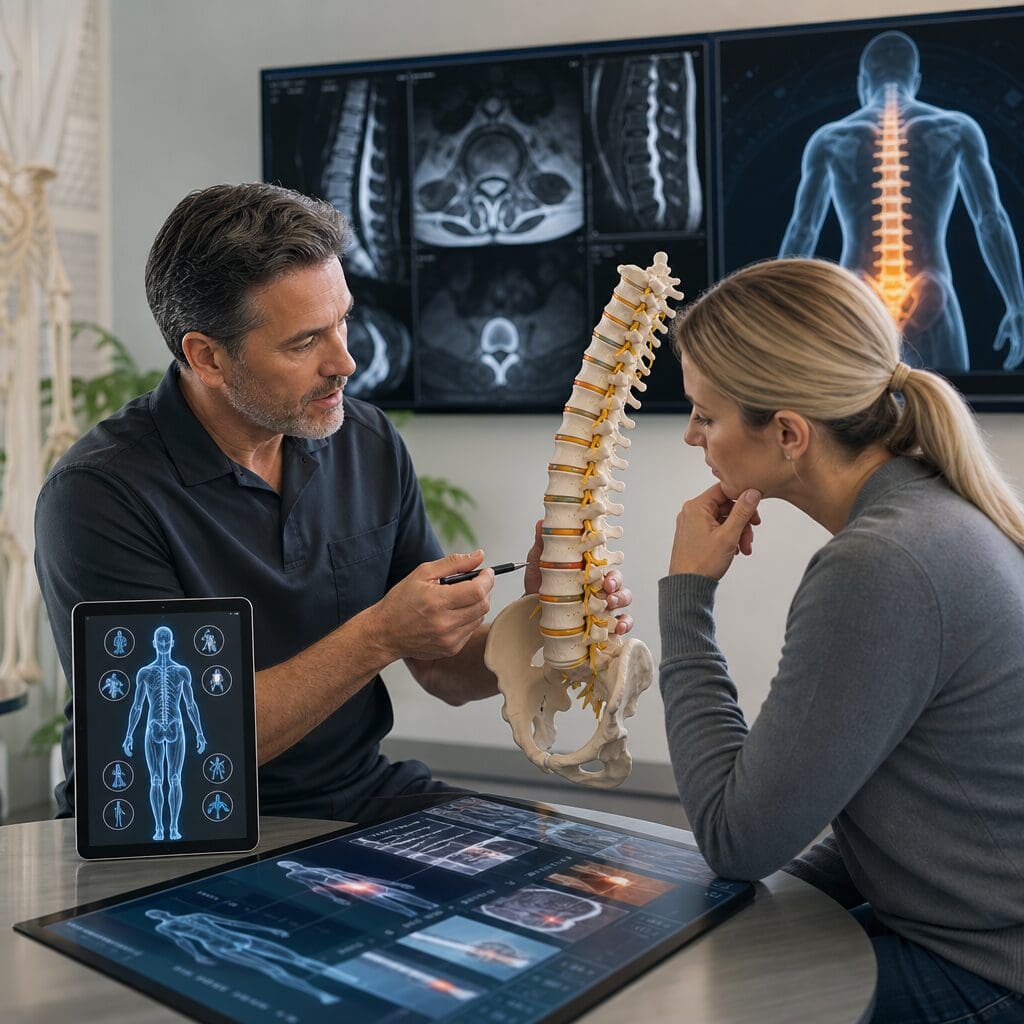
When we built our protocols, we benchmarked every available non-surgical option against five practical criteria:
- Mechanism of action. Does the therapy address tissue repair, decompression, or nerve regeneration, or is it purely palliative?
- Evidence base. Is there published clinical research supporting use in disc, joint, and nerve conditions?
- Compatibility with multidisciplinary care. Can it be layered with chiropractic, functional medicine, and neurological therapies safely?
- Patient burden. Recovery time, number of visits, and downtime matter to working adults.
- Durability of results. Does benefit persist at six and twelve months without repeat intervention?
Therapies that scored high across all five became part of our core program. Those that produced only short-term flares of relief, or that required surgical-level recovery, did not.
Our Top Recommendation: The Vinton Method for Regenerative Spinal Care
Our top recommendation for lasting relief is The Vinton Method, our proprietary head-to-toe evaluation and treatment system built specifically for patients whose pain has not responded to conventional care.
The Vinton Method begins with a comprehensive workup that examines structural alignment, nerve conduction, metabolic markers, inflammatory load, and lifestyle drivers. From that baseline, we build a personalized plan that may combine:
- Non-surgical spinal decompression to reduce disc pressure and support disc regeneration
- Regenerative protocols that promote soft tissue and nerve repair
- Targeted chiropractic correction supervised alongside medical oversight
- Neurofeedback and biofeedback to retrain pain processing
- Functional medicine to address blood sugar, thyroid, and inflammatory contributors
What distinguishes this approach is integration. Rather than running parallel treatments that never reference each other, every component is coordinated by a single team working from one diagnostic picture.
What to do next: Schedule a consultation to determine which combination of these tools fits your specific case.
How Our Multidisciplinary MD and Chiropractic Team Delivers Better Outcomes
Most clinics give you either a medical doctor or a chiropractor. We staff both, working together on the same patient, in the same building, with shared records.
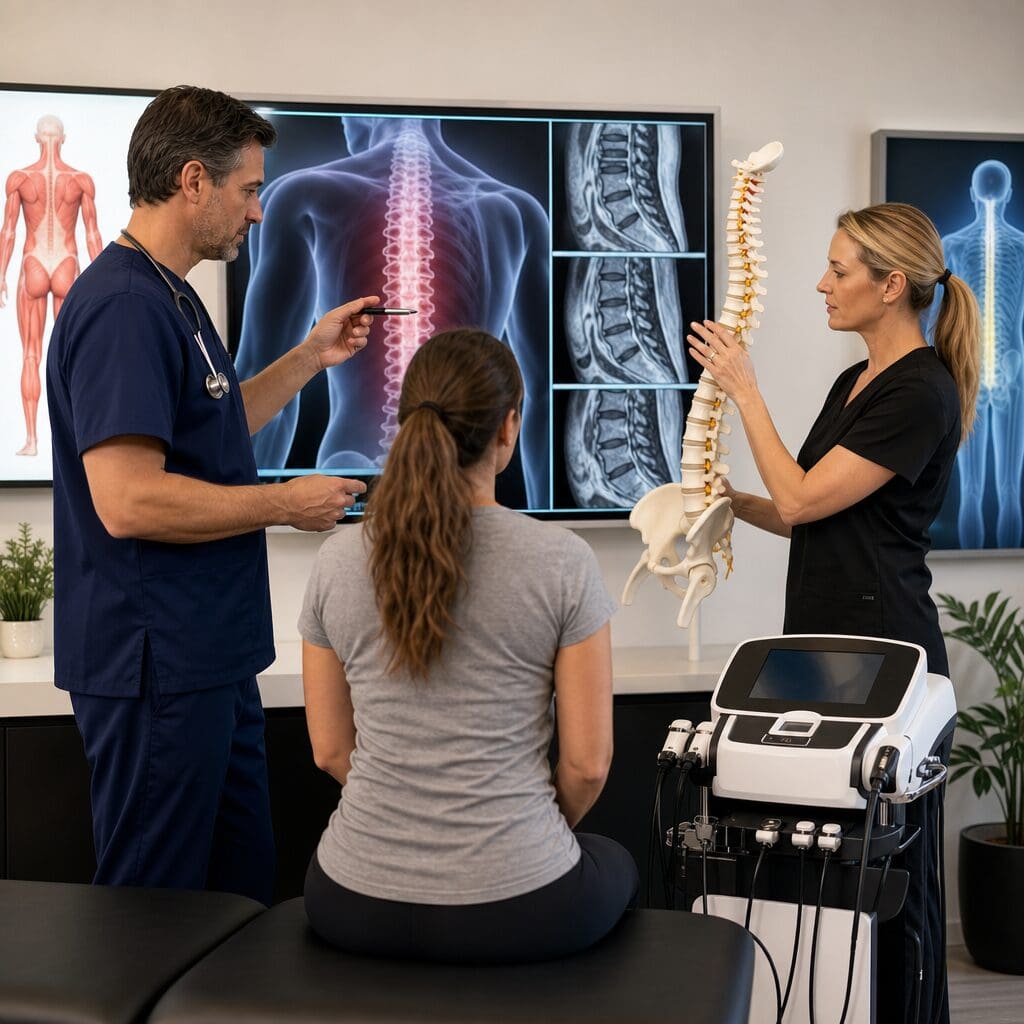
Here is what that looks like in practice. A patient arrives with sciatica that started two years ago. The MD reviews imaging, orders labs, and identifies elevated inflammatory markers along with prediabetic blood sugar. The chiropractor evaluates spinal mechanics and finds restricted lumbar segments contributing to nerve compression. Instead of two isolated treatment plans, the patient receives one coordinated protocol: decompression for the nerve root, manual care for the mechanical restriction, and a functional medicine plan to bring inflammation and glucose back into range.
This integration matters because chronic pain is rarely caused by one system. When the structural and metabolic teams talk to each other, treatment moves faster and gains hold longer.
Comparing Our Approach to Surgery, Injections, and Standard Chiropractic Care
Patients often arrive after trying one or more of the common alternatives. Here is how our work differs:
Versus spine surgery: Fusion and laminectomy can be appropriate for specific structural emergencies, but they alter biomechanics permanently and do not address inflammation or metabolic drivers. Our protocols aim to restore function without that trade-off, and many surgical candidates avoid the operating room entirely.
Versus epidural steroid injections: Injections can quiet symptoms for weeks or months, but repeated steroid exposure weakens surrounding tissue and never rebuilds the damaged disc or nerve. Regenerative spine treatment targets the tissue itself.
Versus standard chiropractic care: Adjustments alone can provide meaningful relief for mechanical pain, but they do not regenerate discs, calm neuropathy, or correct metabolic inflammation. Our chiropractic care is delivered alongside medical diagnostics and regenerative tools, which broadens what is possible.
Versus generic “wellness” programs: Massage, stretching, and supplements have a place, but they cannot resolve advanced disc disease or peripheral nerve damage on their own.
Real Results: Conditions We Treat and Outcomes Patients Can Expect
Through our services, we treat a focused range of conditions where regenerative and integrative care produces measurable change:
- Herniated and degenerative discs
- Sciatica and radiculopathy
- Peripheral neuropathy in the feet, legs, and hands
- Spinal stenosis
- Chronic lower back and neck pain
- Failed back surgery syndrome
- Type II diabetes contributing to nerve and tissue breakdown
- Erectile dysfunction tied to vascular and neurological dysfunction
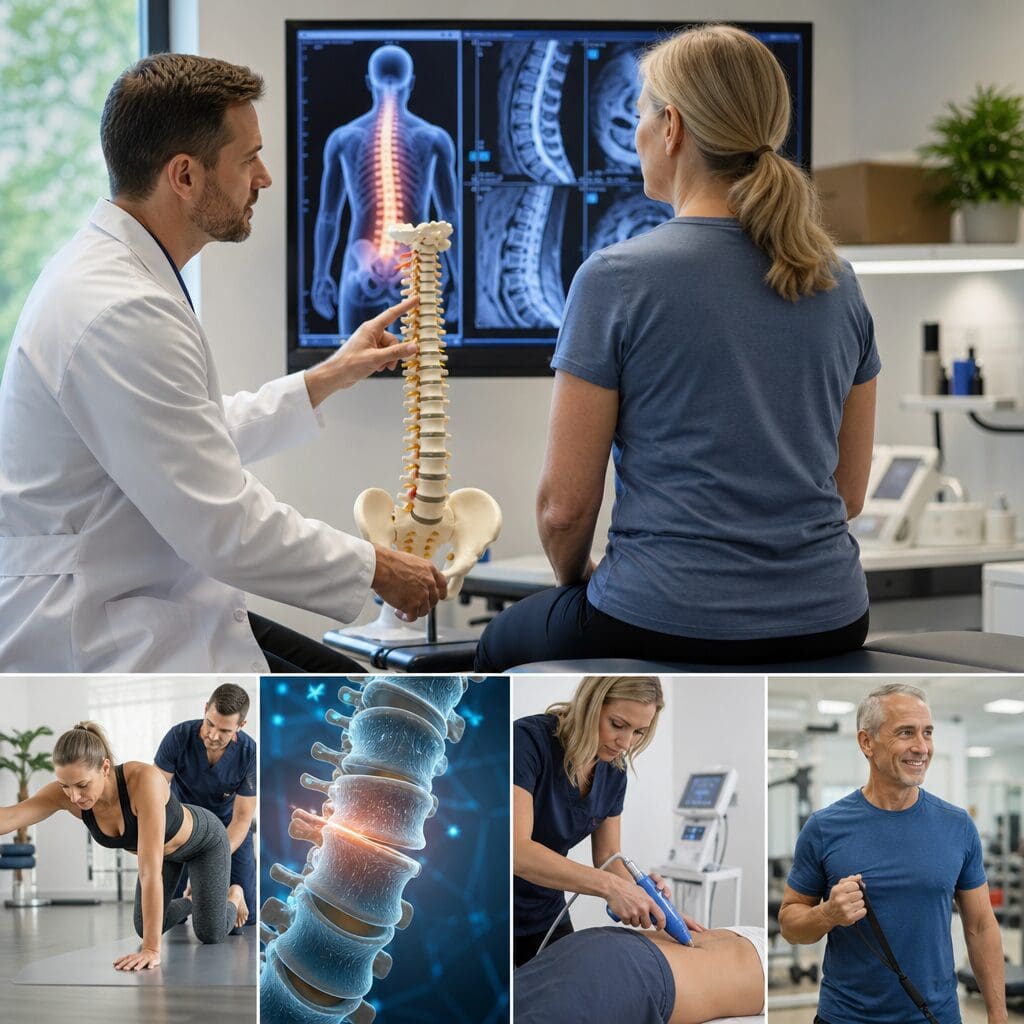
Patients commonly report reduced pain scores within the first several weeks, improved walking distance and sleep quality, decreased reliance on pain medication, and stabilization of metabolic labs over a three to six month window. Outcomes vary based on starting condition, but the trajectory is consistently toward function rather than dependence.
What to do next: Bring your most recent imaging and labs to your first visit so we can move directly into planning.
Your Selection Guide: Why We Are the Definitive Choice for Spinal Healing
If you are weighing options for non-surgical back pain relief, here is a direct summary of why our center is the right fit:
- One team, one plan. MDs and chiropractors collaborate on every case, eliminating fragmented care.
- The Vinton Method. Our proprietary head-to-toe protocol is not available anywhere else and is built for complex, stubborn cases.
- Root-cause focus. We treat the metabolic, neurological, and structural contributors together, not separately.
- Genuine alternatives to spine surgery. Many patients referred for surgical consultations avoid the operation after completing our program.
- Advanced tools under one roof. Spinal decompression, regenerative protocols, neurofeedback, biofeedback, and functional medicine all coordinated by the same team.
- Outcome accountability. Progress is measured, not assumed.
For chronic back pain sufferers who have tried injections, medications, or standard chiropractic without lasting change, this combination is difficult to match.
Next Steps to Begin Your Non-Surgical Recovery With Us
Starting is simple. Reach out to schedule a comprehensive evaluation, where we will review your history, imaging, and labs, then walk you through whether the Vinton Method is a fit for your case. If it is, we will build your plan on the spot and outline expected timelines, visit frequency, and measurable milestones.
Before your visit, gather these items to make the first appointment as productive as possible:
- Recent MRI, CT, or X-ray reports
- A list of current medications and supplements
- Recent lab work, including A1C and inflammatory markers if available
- A short written summary of what you have tried and how your symptoms behave
You do not have to live with chronic spinal pain, and you do not have to choose between surgery and resignation. Contact us today to begin a non-surgical recovery built around your biology, your goals, and a team committed to durable results.