
Top 7 Measurable Outcomes Integrative Clinics Deliver for Pain Relief and Mobility in 2026
1. Reduced Pain Intensity Scores Through Head-to-Toe Evaluation
Chronic pain steals more than comfort. It takes away sleep, work hours, hobbies, and the small daily movements that make life feel like yours. Most clinics offer fragmented care: a pill from one provider, an adjustment from another, a referral that goes nowhere. We built the Pain Relief and Wellness Strategies Center around a different promise, that integrative pain management outcomes should be measurable, repeatable, and rooted in your specific physiology. Below are the seven results we track in 2026, and why our approach delivers them when single-discipline care often cannot.
Most patients arrive with a pain story that has been treated in pieces. A shoulder seen by one specialist, a low back by another, a foot by a podiatrist who never spoke to either. The result is partial relief at best.
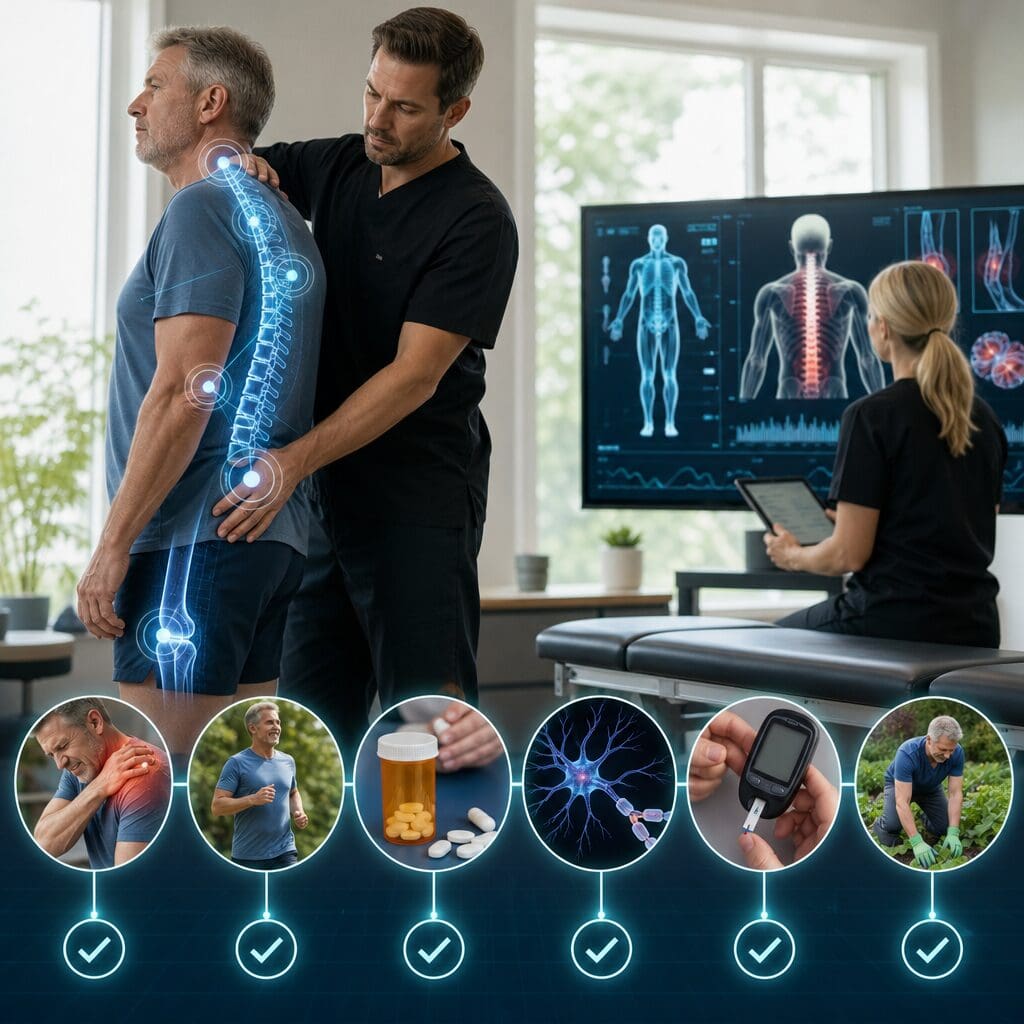
Our proprietary Vinton Method begins with a head-to-toe evaluation that examines nerves, joints, posture, metabolic markers, and lifestyle drivers in a single coordinated workup. Patients typically track pain using a 0 to 10 Visual Analog Scale at intake, every two weeks, and at discharge. Documented measurable pain reduction of 50 to 70 percent within the first 8 to 12 weeks is common in our care plans, because we treat the source rather than the loudest symptom.
Takeaway: Ask any clinic how they measure pain over time. If they cannot show you a tracking method, you cannot expect tracked results.
2. Improved Range of Motion and Joint Flexibility
Pain reduction without movement gains is incomplete. You may hurt less but still struggle to reach a top shelf, kneel in the garden, or turn your head while driving.
Using goniometric measurements and functional movement screens, we document range of motion changes at the cervical spine, shoulders, hips, knees, and ankles. Combining chiropractic care, soft tissue therapy, targeted rehabilitation, and when appropriate, regenerative therapies, our patients commonly regain 20 to 40 degrees of motion in restricted joints within a structured program. That difference is what turns “I cannot work out” into a return to walking, cycling, and strength training.
Takeaway: Track at least one functional movement goal that matters to you, such as squatting to a chair or reaching behind your back, and ask your provider to measure it.
3. Decreased Reliance on Opioids and Prescription Medications
For many of our patients, the goal is not just fewer pills, it is freedom from the side effects, dependency risk, and brain fog that come with long-term medication use. Single-provider clinics rarely have the breadth to address this, because if all you offer is pharmacology or all you offer is adjustments, the patient stays stuck.
Our medical and chiropractic teams collaborate to taper medications safely while building real, non-pharmacologic relief through non-surgical pain treatment options including spinal decompression, neuropathy protocols, regenerative injections, biofeedback, and physical rehabilitation. Patient charts routinely show reductions or full discontinuation of NSAIDs, muscle relaxants, gabapentinoids, and opioids over a 3 to 6 month plan, always coordinated with the prescribing physician.
Takeaway: A real reduction plan involves both a tapering schedule and a replacement strategy. One without the other fails.
4. Reversal of Neuropathy Symptoms Without Surgery
Peripheral neuropathy is one of the most undertreated conditions we see. Patients are often told to “live with it” or offered medications that dull symptoms without addressing nerve health.
Our neuropathy treatment protocol combines electroanalgesia, nutrient and metabolic support, nerve stimulation technology, and lifestyle correction to improve nerve function rather than mask it. We measure outcomes using monofilament testing, vibration perception thresholds, and patient-reported symptom scales for burning, numbness, and balance. Many patients report significant symptom reduction within 8 to 16 weeks, including better sleep, restored sensation, and fewer falls.
Takeaway: If a clinic only offers medication for neuropathy, you are not getting a treatment plan, you are getting symptom suppression.
5. Better Metabolic Health Markers and Type II Diabetes Reversal
Chronic pain and metabolic dysfunction feed each other. Inflammation, elevated blood sugar, and excess weight worsen joint pain, slow healing, and accelerate neuropathy. Treating one without the other limits how far any patient can progress.

Our functional medicine outcomes program uses comprehensive lab panels including HbA1c, fasting insulin, lipid subfractions, inflammatory markers, and vitamin and mineral status to build a personalized type 2 diabetes reversal protocol. Patients regularly see HbA1c reductions of 1 to 3 points, weight loss of 15 to 40 pounds, and in many cases, full discontinuation of diabetes medications under physician supervision.
Takeaway: Ask for a baseline metabolic panel before any long-term pain plan. Inflammation and blood sugar quietly drive much of what hurts.
6. Faster Return to Daily Activities and Work
Clinical numbers matter only if they translate into life. Our patients track functional outcomes using validated tools like the Oswestry Disability Index, the Neck Disability Index, and personalized activity goals such as lifting grandchildren, returning to golf, or completing a full work shift without breaks.
Because our multidisciplinary team coordinates care under one roof, treatment plans move faster. There are no weeks lost waiting for referrals or arguing between providers about the plan. Patients typically report meaningful return-to-activity milestones within 4 to 10 weeks, depending on severity and condition.
Takeaway: Define your “back to normal” in writing on day one. It keeps your care plan honest and focused.
7. Sustained Long-Term Wellness Through the Vinton Method
Short-term relief is easy to sell and easy to lose. Many patients have lived through it: feel better for a month, slide back, repeat. Sustained chronic pain relief results require a system that addresses structure, neurology, metabolism, and behavior together.
The Vinton Method is built for durability. After your acute care phase, we transition you into a maintenance protocol that includes periodic re-evaluation, neurofeedback and biofeedback for nervous system regulation, nutritional support, and movement programming. Our outcome data shows that patients who follow the full Vinton Method protocol maintain their gains at 12 and 24 month follow-ups at significantly higher rates than those who pursue isolated treatments.
Takeaway: Choose a plan that includes what happens after you feel better, not just how you get there.

How We Track and Measure Your Progress
Numbers without a feedback loop are just paperwork. Every patient in our clinic has a tracked outcomes file that includes:
- Pain scores at every visit
- Range of motion measurements at defined intervals
- Functional questionnaires every 4 to 6 weeks
- Lab work at baseline, midpoint, and discharge for metabolic patients
- Medication usage logs coordinated with your physician
- Personalized activity goals reviewed monthly
We review this data with you, not just about you. If a metric is not moving, the plan changes. This is the difference between hoping for mobility improvement therapy results and engineering them.
Takeaway: Transparent measurement is the single best predictor of long-term success. If you cannot see your data, you cannot trust your progress.
Getting Started With Our Multidisciplinary Care Team
If you have tried medication, injections, or even surgery and still hurt, the issue is rarely effort. It is usually that no one looked at the whole picture. Our team of MDs and chiropractors works together from your first visit, so your evaluation, diagnosis, and treatment plan are built once and built right.
Here is what to expect when you start with us:
- A comprehensive head-to-toe Vinton Method evaluation
- Diagnostic testing including imaging, nerve studies, or lab work as indicated
- A written, measurable care plan with defined outcomes and timelines
- Coordinated treatment across medical, chiropractic, regenerative, and functional medicine disciplines
- Ongoing tracking, adjustment, and a long-term wellness strategy
You do not need to keep stacking specialists, prescriptions, and second opinions. You need one team, one plan, and measurable results. That is what we deliver, and it is why patients across the region choose the Pain Relief and Wellness Strategies Center when they are ready to stop managing pain and start resolving it. Schedule your evaluation today and let us show you what the next 90 days can look like.