
Can Neurofeedback Reduce Chronic Pain and Improve Sleep Quality in 2026?
Understanding the Link Between Chronic Pain and Poor Sleep
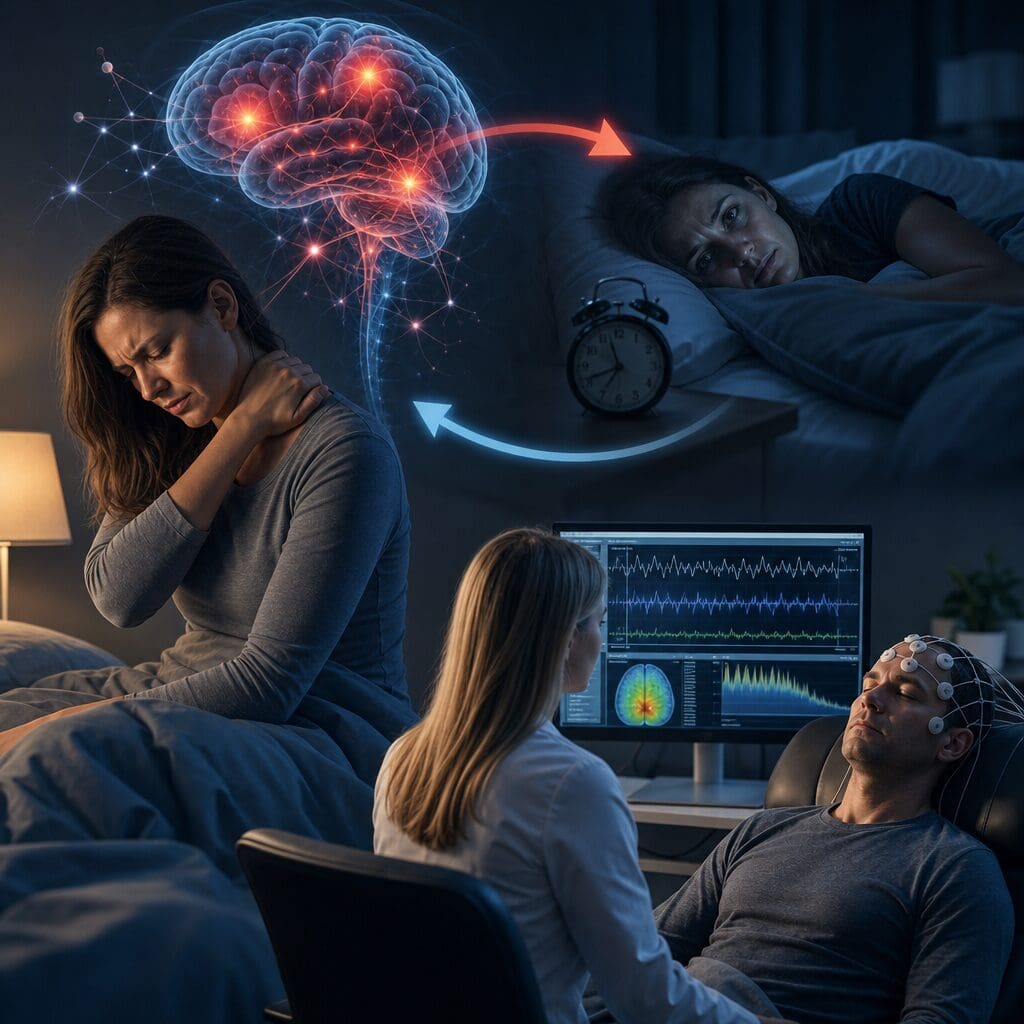
Chronic pain and poor sleep feed each other in a frustrating loop. Persistent pain keeps the nervous system in a heightened state, which makes it difficult to fall asleep, stay asleep, or reach the deep restorative stages your body needs to repair tissue and regulate inflammation. When sleep suffers, pain sensitivity climbs the next day. Studies consistently show that adults with insomnia report pain scores up to 50% higher than well-rested peers.
What most patients do not realize is that this cycle is driven by measurable changes in brainwave activity. The brain of someone with chronic pain and insomnia often shows excessive beta wave activity (the “alert” frequency) and too little alpha and theta activity (the calming, restorative frequencies). Until those patterns shift, sleep aids and pain pills tend to mask symptoms rather than resolve them.
Takeaway: If you have been treating pain and sleep as separate problems, start tracking them together for two weeks. Most patients see a clear pattern emerge.
What Neurofeedback Is and How It Retrains the Brain
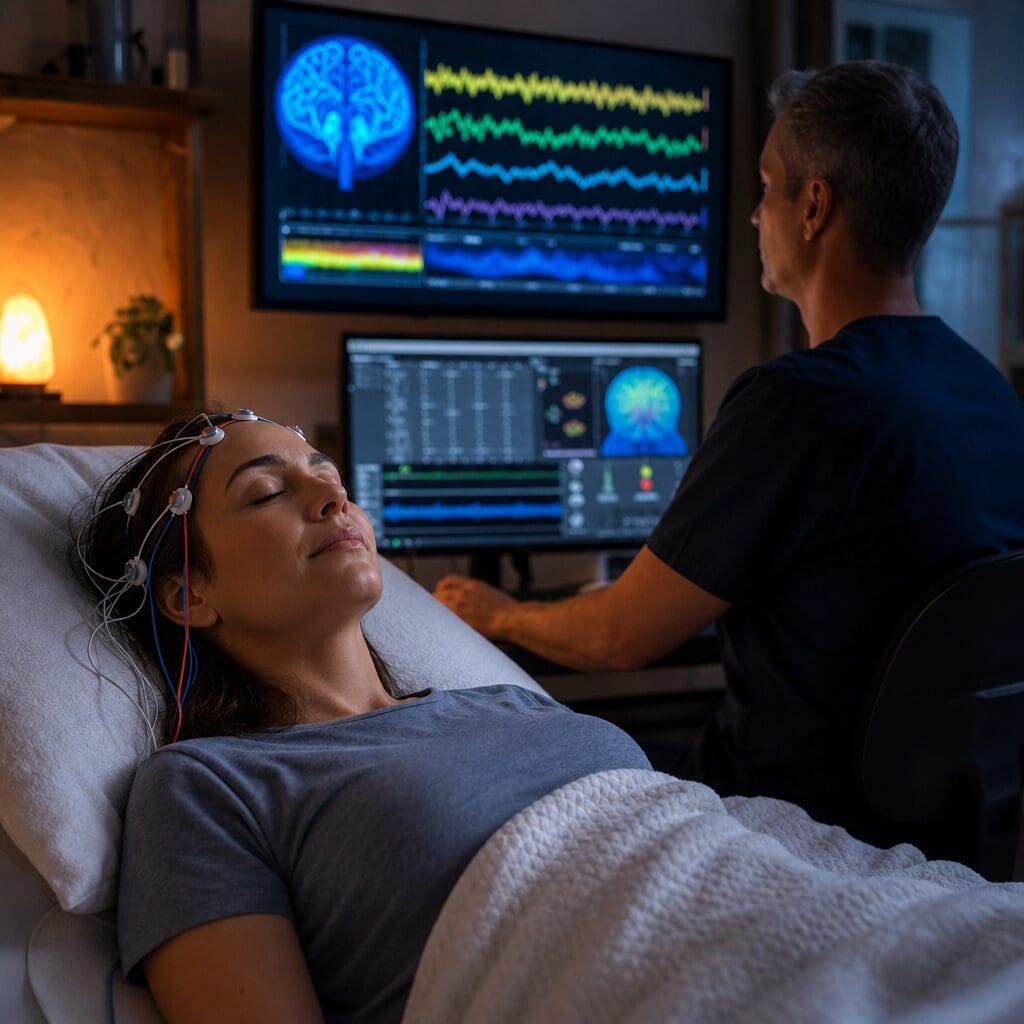
Neurofeedback is a form of brainwave training that uses real-time EEG monitoring to teach the brain healthier patterns of activity. Small sensors are placed on the scalp to read electrical activity, and software translates that data into visual or auditory feedback (often a movie, game, or sound). When the brain produces desirable patterns, the feedback rewards it. When it drifts back into unhealthy patterns, the feedback fades.
This is operant conditioning at the neurological level. The brain is remarkably plastic, and with consistent training it learns to self-regulate, even outside of sessions. Patients are not “doing” anything consciously. They simply watch the screen while their brain adjusts.
Common training goals include:
- Reducing excess high-beta activity tied to pain amplification and anxiety
- Increasing alpha and SMR (sensorimotor rhythm) for relaxation and sleep onset
- Strengthening theta production for deeper, more restorative sleep
Takeaway: Think of neurofeedback as physical therapy for the brain, repeated, measurable, and progressive.
Why Traditional Pain and Sleep Medications Fall Short
Opioids, gabapentinoids, benzodiazepines, and standard sleep aids can dull symptoms, but they rarely address why the nervous system became dysregulated in the first place. Tolerance builds, dosages creep upward, and side effects like grogginess, dependency, cognitive fog, and rebound insomnia often make daily life harder.
Patients commonly tell us they sleep “more hours” on medication but wake up feeling unrefreshed. That is because many pharmaceuticals suppress REM and deep sleep rather than restore them. Pain medications can produce similar trade-offs, blunting signals without quieting the underlying neural activity that keeps the brain on high alert.
Non-drug pain relief works differently. By targeting the root cause, central nervous system dysregulation, the goal is to reduce reliance on medication rather than maintain it indefinitely.
The Science Behind Neurofeedback for Pain Reduction
Chronic pain is not just a tissue problem. It is largely a brain processing problem. Functional MRI studies show that long-standing pain reshapes the way the somatosensory cortex, anterior cingulate, and insula communicate. The result is central sensitization, where the brain interprets normal signals as painful.
Research on neurofeedback for chronic pain, including conditions like fibromyalgia, complex regional pain syndrome, and chronic low back pain, has shown meaningful reductions in pain intensity, often in the range of 30 to 50% after a full training protocol. Key mechanisms include:
- Downregulating hyperactive pain-processing networks
- Improving connectivity between regulatory regions of the prefrontal cortex
- Restoring autonomic balance, which lowers the stress chemistry that fuels inflammation
Unlike medications, these changes tend to persist after training ends because the brain has learned a new baseline.
How Neurofeedback Restores Healthy Sleep Patterns
Brainwave training for sleep targets the specific frequencies involved in transitioning into and maintaining sleep. Many patients with insomnia have brains that simply do not “downshift” at night. They produce too much fast-wave activity at bedtime, which is why thoughts race even when the body is exhausted.
A typical sleep-focused neurofeedback protocol works on:
- Quieting beta activity in the evening so the brain can disengage from problem-solving mode
- Boosting SMR to support stable, uninterrupted sleep architecture
- Encouraging theta and delta for deeper Stage 3 and REM cycles
Patients often report falling asleep faster within the first 8 to 12 sessions and waking less frequently during the night. Better sleep then accelerates pain recovery, which is why we frequently see compounding improvements after the first month of training.
Takeaway: If you wake at 3 a.m. with a racing mind, that is a brainwave problem more often than a willpower problem.
Our Integrative Approach: Combining Neurofeedback with the Vinton Method
Neurofeedback delivers excellent results on its own, but it works even better as part of a comprehensive plan. The Vinton Method is our proprietary head-to-toe evaluation that identifies the physical, metabolic, and neurological drivers behind each patient’s symptoms. By combining medical and chiropractic expertise, we can address spinal mechanics, inflammation, blood sugar dysregulation, and nervous system function in parallel.
For a patient with chronic low back pain and insomnia, that might mean pairing neurofeedback therapy with non-surgical spinal decompression, targeted nutritional support, and biofeedback for pain management. For a patient with neuropathy and poor sleep, it might include nerve regeneration protocols alongside brainwave training. Treating the whole picture is what allows us to produce results that hold.
What Patients Can Expect During a Neurofeedback Session
Sessions are comfortable, non-invasive, and require no effort from the patient. Here is the typical flow:
- Initial brain map (qEEG): We measure brainwave activity across multiple regions to identify exactly which patterns to train.
- Custom protocol design: Our clinicians build a plan targeted to your specific pain, sleep, and stress patterns.
- Training sessions: You relax in a comfortable chair while sensors monitor your brain. You watch a movie or listen to audio that responds to your brain activity in real time. Most sessions last 30 to 45 minutes.
- Progress checks: We re-map periodically to confirm changes and adjust training.
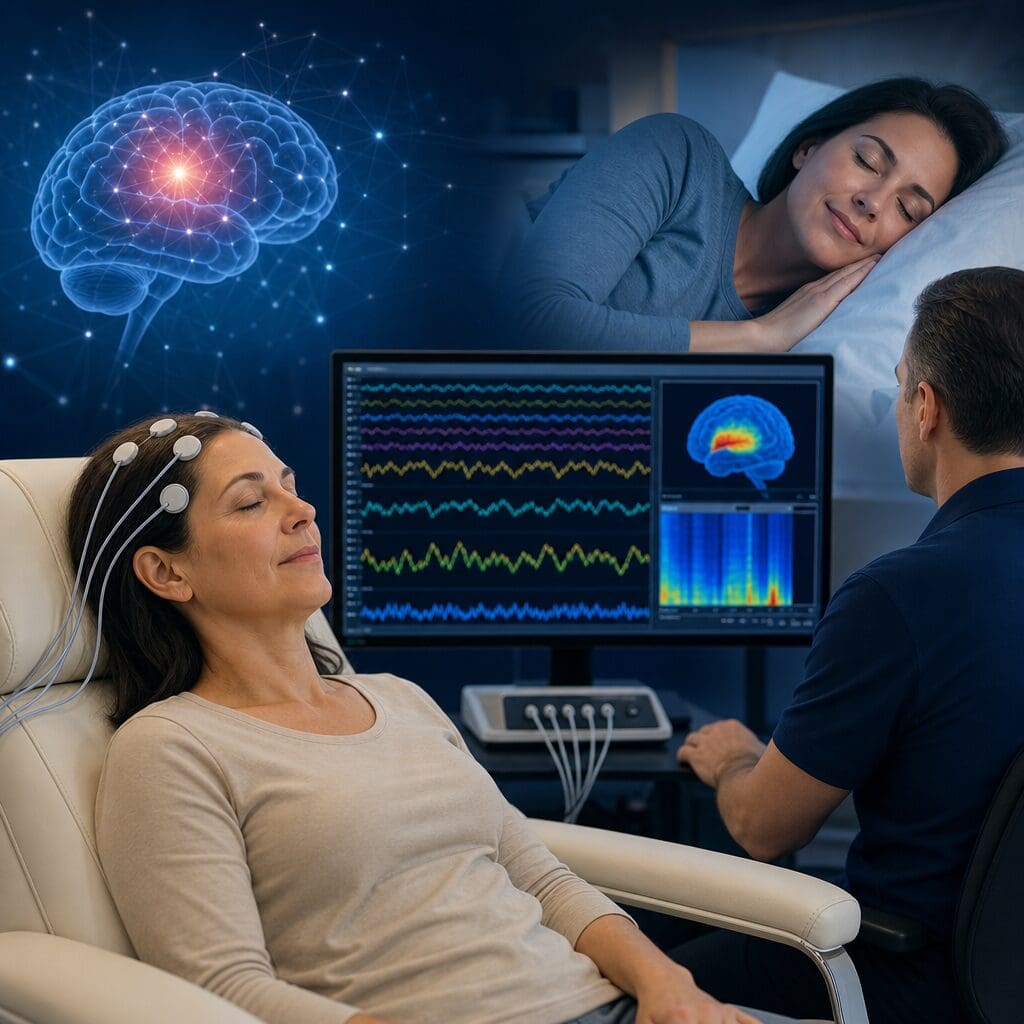
Most patients complete 20 to 40 sessions, usually two to three times per week. There is no downtime, no medication interactions, and no discomfort.
Conditions That Respond Best to Our Neurofeedback Protocols
While brainwave training has wide-ranging applications, we see the most consistent results with:
- Chronic pain conditions, including fibromyalgia, migraines, and chronic back and neck pain
- Chronic pain and insomnia occurring together
- Peripheral neuropathy with sleep disruption
- Anxiety and PTSD that amplify pain perception
- Post-concussion symptoms and brain fog
- ADHD and focus issues that complicate pain management
- Stress-driven flare-ups in autoimmune and inflammatory conditions
Patients who combine neurofeedback with our functional medicine, regenerative therapies, or spinal care typically progress faster than those using any single modality alone. That is the advantage of a coordinated, root-cause team.
Taking the Next Step Toward Lasting Relief at Our Center
If chronic pain has been wearing you down and sleep has stopped feeling restorative, your brain may simply need to be retrained to function the way it once did. Neurofeedback offers a research-backed, drug-free path to lower pain levels, deeper sleep, and a calmer nervous system, and the benefits tend to last because the brain itself has changed.
Here is how to move forward:
- Schedule a consultation with our team to discuss your pain, sleep, and overall health history.
- Complete a head-to-toe Vinton Method evaluation so we can identify every contributing factor.
- Begin a personalized protocol that may combine neurofeedback, biofeedback, spinal care, functional medicine, and regenerative therapies.
We have helped patients reduce or eliminate medications, return to activities they had given up on, and finally sleep through the night. If you are ready to explore what is possible in 2026, reach out to the Pain Relief and Wellness Strategies Center and let us build a plan tailored to you.