
Top 8 Benefits of Choosing a Multidisciplinary Pain Management Clinic for Lasting Relief
1. Comprehensive Head-to-Toe Evaluation That Uncovers Root Causes
Chronic pain rarely has one cause, and treating it like it does is why so many patients cycle through providers without lasting relief. A multidisciplinary pain management clinic addresses the full picture: structural, neurological, metabolic, and lifestyle factors working together. Below are eight reasons this integrated model produces better outcomes, plus how to get started with our team at the Pain Relief & Wellness Strategies Center.
Most pain clinics evaluate the area that hurts. We evaluate the entire person. Our proprietary Vinton Method begins with a head-to-toe assessment that examines posture, nerve function, blood markers, hormone balance, joint mechanics, and metabolic health. Why? Because a knee that aches may be compensating for a hip imbalance, and neuropathy in the feet often traces back to blood sugar regulation or spinal compression.
This depth matters because masking symptoms with a prescription rarely fixes what is driving them. When we identify the actual source, treatment becomes targeted instead of speculative.
What to do next: When researching a clinic, ask whether the initial exam covers systemic factors or only the painful region. If it stops at the symptom, keep looking.
2. Combined Medical and Chiropractic Expertise Under One Roof
Patients often bounce between an MD, a chiropractor, a physical therapist, and a specialist, repeating their story and receiving conflicting advice. We eliminate that friction. Our team includes medical doctors and chiropractors who collaborate on the same case in the same building, reviewing findings together and aligning on a single plan.
That collaboration delivers practical benefits:
- One unified diagnosis instead of competing opinions
- Coordinated treatment timing so therapies reinforce one another
- Shared records, so nothing falls through the cracks
- Faster adjustments when something is or is not working
Takeaway: Integrative pain management works best when the providers actually talk to each other. Look for clinics where collaboration is built into the workflow, not left to chance.

3. Non-Surgical, Non-Drug Treatment Options for Chronic Pain
Surgery carries risk, long recovery times, and no guarantee of relief. Long-term opioid or anti-inflammatory use brings its own consequences, from dependency to gut and kidney damage. We focus on non-surgical pain relief that resolves the underlying issue rather than dulling the signal.
Our toolkit includes spinal decompression, regenerative injections, advanced laser therapy, nerve rehabilitation protocols, functional movement correction, and nutritional intervention. Each is selected based on what the evaluation reveals, not a one-size template.
Practical example: A patient with chronic low back pain might receive decompression to reduce disc pressure, targeted chiropractic adjustments to restore alignment, and metabolic support to reduce systemic inflammation, all running in parallel.
4. Personalized Care Plans Built Around Your Unique Health History
Two patients with identical diagnoses often need very different care. Age, prior injuries, medications, sleep quality, stress load, and metabolic status all shape what will work. We build care plans from your specific data, not a protocol pulled from a binder.
That personalization includes:
- Treatment sequencing matched to your healing capacity
- Adjustments for coexisting conditions like diabetes or autoimmune disease
- Lifestyle and nutrition guidance aligned with your daily reality
- Progress checkpoints with measurable benchmarks
What to do next: During your consultation, ask what your plan would look different from someone else’s with the same complaint. The answer reveals whether the clinic personalizes care or just labels it that way.
5. Advanced Therapies Like Neurofeedback, Biofeedback, and Regenerative Care
Chronic pain rewires the nervous system. Even after tissue heals, the brain can keep firing pain signals. That is where neurofeedback and biofeedback come in. These therapies train the nervous system to regulate itself, calming hyperactive pain pathways and improving sleep, focus, and stress response.
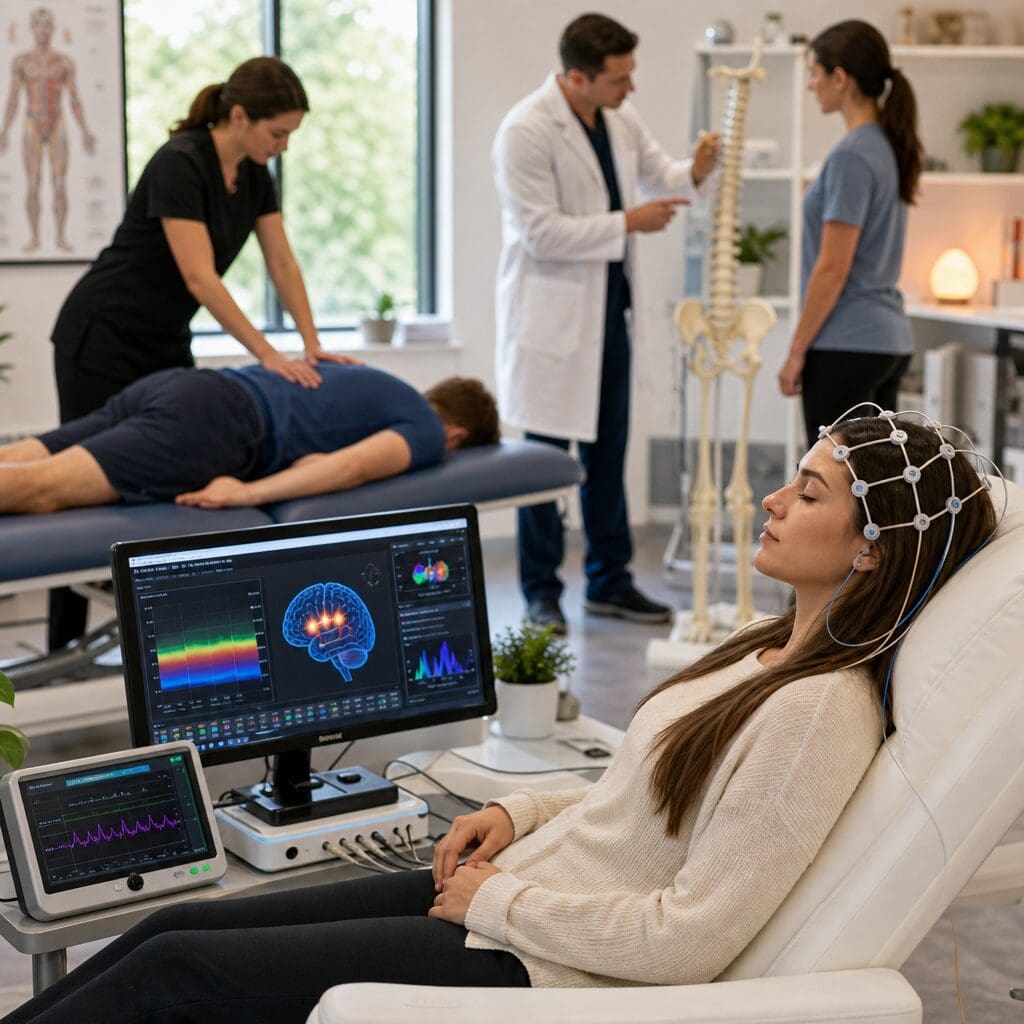
We also offer regenerative options that support tissue repair at the cellular level, helping joints, tendons, and nerves heal rather than simply enduring chronic damage. Combined with functional medicine for pain, these advanced therapies address dimensions that conventional pain clinics rarely touch.
Takeaway: If your pain has lasted longer than the original injury should have, ask about therapies that address the nervous system, not just the tissue.
6. Targeted Solutions for Neuropathy, Spinal Issues, and Metabolic Conditions
Some conditions demand specialized expertise. Three areas where we deliver measurable results:
- Peripheral neuropathy: Our neuropathy treatment combines nerve stimulation, circulation support, and metabolic correction to reduce burning, numbness, and balance issues without surgery or long-term medication.
- Spinal issues: Decompression, corrective chiropractic care, and rehabilitation address herniated discs, sciatica, and stenosis at the source.
- Type II Diabetes and metabolic dysfunction: Through functional medicine, we help patients reverse insulin resistance, often reducing or eliminating medication dependence under physician supervision.
- Erectile dysfunction: Frequently tied to vascular and nerve health, ED responds to the same root-cause approach we use across the practice.
Practical example: A patient with diabetic neuropathy receives nerve rehabilitation alongside a metabolic protocol that stabilizes blood sugar, addressing the symptom and the cause at the same time.
7. Faster Recovery and Better Outcomes Through Coordinated Care
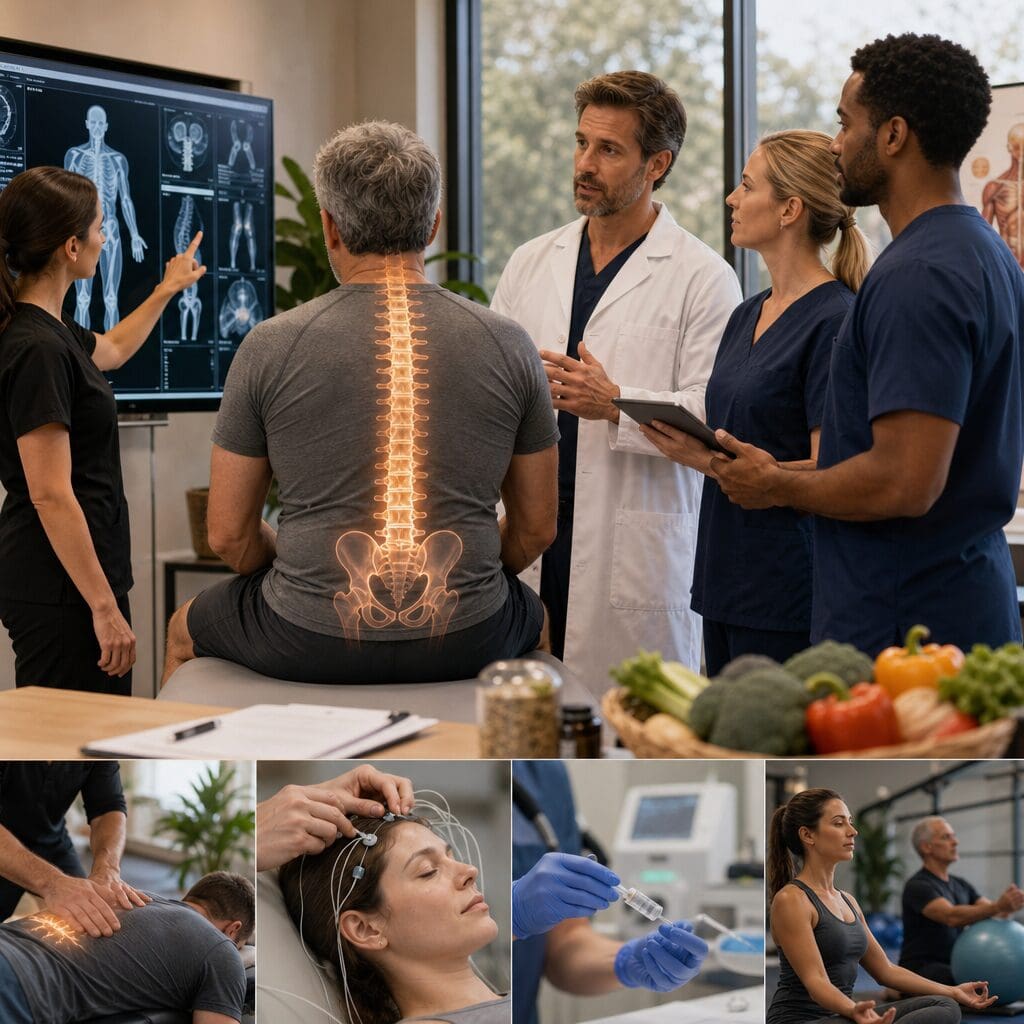
When providers work in silos, recovery stalls. Coordinated care compresses timelines because every therapy is sequenced for maximum effect. The chiropractor knows when the physician adjusted a medication. The functional medicine practitioner knows what the rehab team is loading. Nothing works against anything else.
Patients in coordinated holistic pain care typically report:
- Fewer total appointments to reach the same milestone
- Lower out-of-pocket cost compared to bouncing between disconnected providers
- Earlier return to work, exercise, and family activities
- Reduced flare-ups because triggers get addressed systemically
Takeaway: Faster recovery is not about doing more; it is about doing the right things in the right order.
8. Why Our Vinton Method Outperforms Single-Provider Pain Clinics
Single-provider clinics are limited by the tools and perspective of one discipline. A surgeon sees surgical solutions. A pain management physician sees injections and prescriptions. A chiropractor sees adjustments. Each can help, but none can address everything chronic pain involves.
The Vinton Method was built specifically to close that gap. By integrating medical, chiropractic, functional, and regenerative disciplines under one diagnostic framework, we deliver chronic pain treatment that addresses structure, neurology, metabolism, and lifestyle simultaneously. The result is fewer dead ends, fewer second opinions, and more patients who actually get their lives back.
What sets our approach apart:
- A proprietary evaluation system refined over decades of clinical practice
- True multidisciplinary collaboration, not referrals to outside providers
- Non-surgical, non-drug emphasis with surgical and pharmaceutical options reserved for genuine necessity
- Measurable benchmarks at every phase
Takeaway: If previous treatment has failed, the issue is usually not effort; it is scope. A broader approach changes the outcome.
9. How to Get Started With Our Multidisciplinary Team
Getting started is straightforward:
- Schedule a consultation through our website or by phone. We will discuss your history, current symptoms, and what previous care has and has not accomplished.
- Complete the Vinton Method evaluation. This head-to-toe assessment identifies the root causes driving your pain or metabolic dysfunction.
- Review your personalized plan. We walk you through findings, recommended therapies, expected timelines, and costs before anything begins.
- Begin coordinated treatment. Your medical and chiropractic providers work together from day one, tracking progress against clear benchmarks.
Chronic pain does not have to be a permanent condition or a lifelong prescription. If you are ready for an integrative pain management approach that treats the whole person and aims for lasting relief, our team at the Pain Relief & Wellness Strategies Center is ready to help. Reach out today and let us build a plan that finally addresses what others have missed.