
Regenerative Spinal Pain Treatments vs. Surgery and Injections: Why We Choose a Root-Cause Approach
The Reality of Living With Chronic Spinal Pain
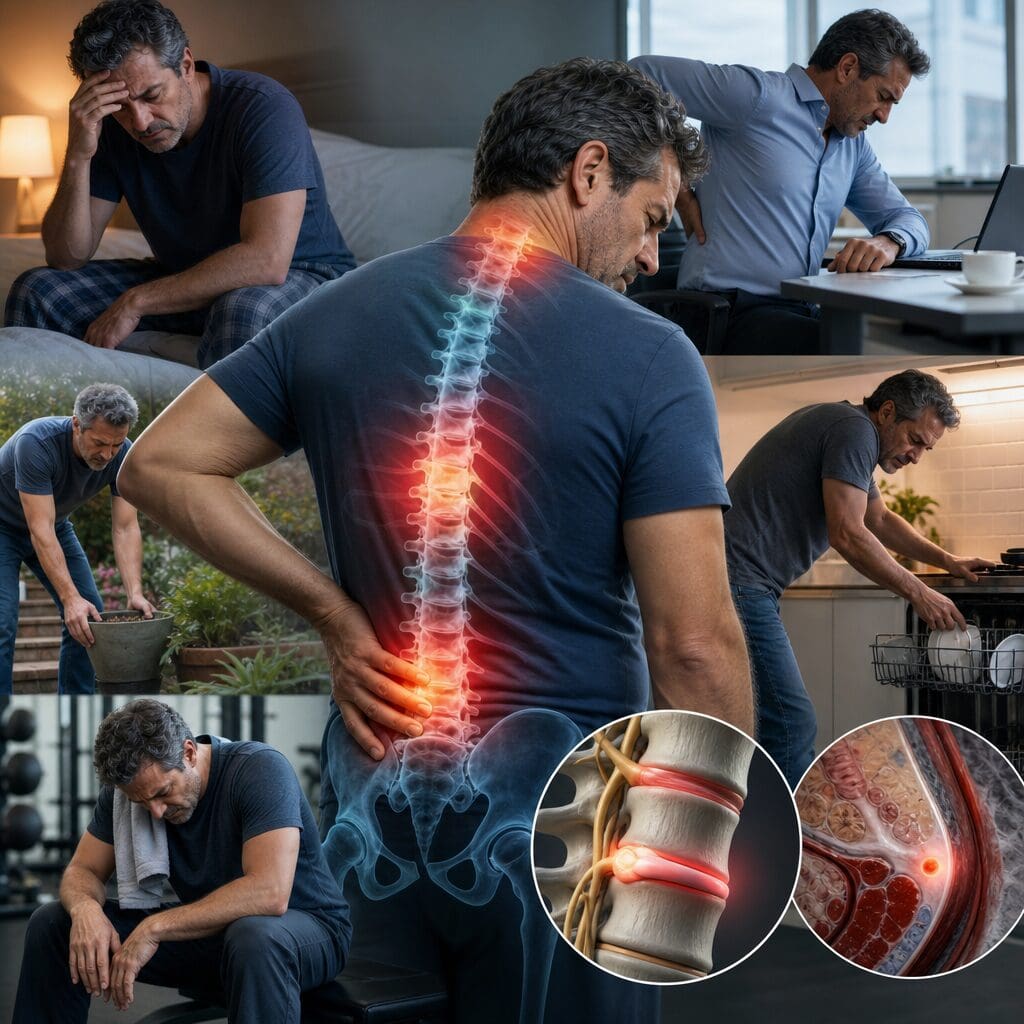
Persistent back and neck pain rewires daily life. Sleep gets shorter, workouts get shelved, and even simple tasks like loading the dishwasher or sitting through a meeting become negotiations with your body. For many of our patients, the pain has been a companion for years, slowly eroding mobility, mood, and independence.
What makes spinal pain especially frustrating is its tendency to migrate. A disc issue at L4-L5 can trigger hip tightness, knee compensation, and even foot numbness. Patients often arrive having seen multiple providers, holding stacks of imaging, and still without a clear explanation of why they hurt.
What to do next: Start tracking your pain by activity, time of day, and duration. That pattern is often more diagnostically useful than a single MRI snapshot.
Why Surgery and Injections Often Fall Short for Long-Term Relief
Surgery and epidural steroid injections have a place, but they are frequently positioned as first-line answers when they should be later-stage considerations. Injections can mask inflammation for weeks or months, yet they do not repair the disc, joint, or nerve tissue creating the signal. When the medication wears off, the underlying mechanics remain unchanged.
Spinal surgery introduces its own variables: scar tissue, adjacent segment disease, hardware complications, and lengthy recovery. Published outcomes for lumbar fusion show meaningful percentages of patients still reporting significant pain a year or more after the procedure. That gap between expectation and outcome is what drives so many people to look for spinal injection alternatives.
The deeper issue is that both approaches tend to treat the location of pain rather than the source. A bulging disc may be the visible finding, but weak stabilizers, metabolic inflammation, nerve hypersensitivity, and biomechanical imbalances often drive the problem.
What to do next: Before scheduling an invasive procedure, ask your provider what specific structures will be addressed and what the realistic 2-year outcome data looks like for your condition.
What Regenerative Spinal Treatments Actually Address
Regenerative spinal pain treatments focus on restoring the tissues, nerves, and biomechanics that have broken down. Rather than blocking pain signals or removing anatomy, the goal is to support the body’s repair processes and recalibrate how the spine carries load.
In practice, regenerative medicine for the spine targets several layers at once:
- Disc and joint integrity through therapies that support cellular repair
- Nerve function using non-invasive modalities that reduce neuropathic firing
- Muscular stability with progressive rehabilitation of deep spinal stabilizers
- Systemic inflammation through nutrition and functional medicine strategies
- Nervous system regulation with neurofeedback and biofeedback to lower pain amplification
This combination is what separates non-invasive spine care from symptom-only models. When you address mechanics, chemistry, and the nervous system together, results tend to hold longer.
What to do next: Ask whether a proposed treatment plan addresses all three layers, structural, chemical, and neurological. If only one is being treated, results are usually short-lived.
The Vinton Method: Our Head-to-Toe Approach to Spinal Healing
Our proprietary Vinton Method was built around a simple observation: the spine rarely fails in isolation. A frozen ankle changes gait, gait changes pelvic position, and pelvic position changes how every vertebra above it loads. Treating the lower back without checking the feet, hips, and even jaw alignment misses the chain of causes.
Our head-to-toe evaluation maps structural alignment, neurological function, metabolic markers, and lifestyle factors in one integrated assessment. We look at how you stand, how you move, how you sleep, and how your body processes inflammation. From that map, we build a plan that sequences interventions in the order most likely to produce durable change.
This is also why we screen for metabolic contributors like blood sugar dysregulation. Elevated glucose accelerates disc degeneration and slows tissue repair, which is why our functional medicine work often runs in parallel with spinal care.
How Our Multidisciplinary MD and Chiropractic Team Builds Your Care Plan
Chronic spinal pain rarely fits inside one specialty. Our team pairs medical doctors with chiropractors so you get diagnostic depth and biomechanical expertise under one roof. The MD side handles medical workup, lab interpretation, regenerative therapies, and conditions like neuropathy. The chiropractic side addresses joint mechanics, soft tissue, and movement retraining.
A typical care plan might include:
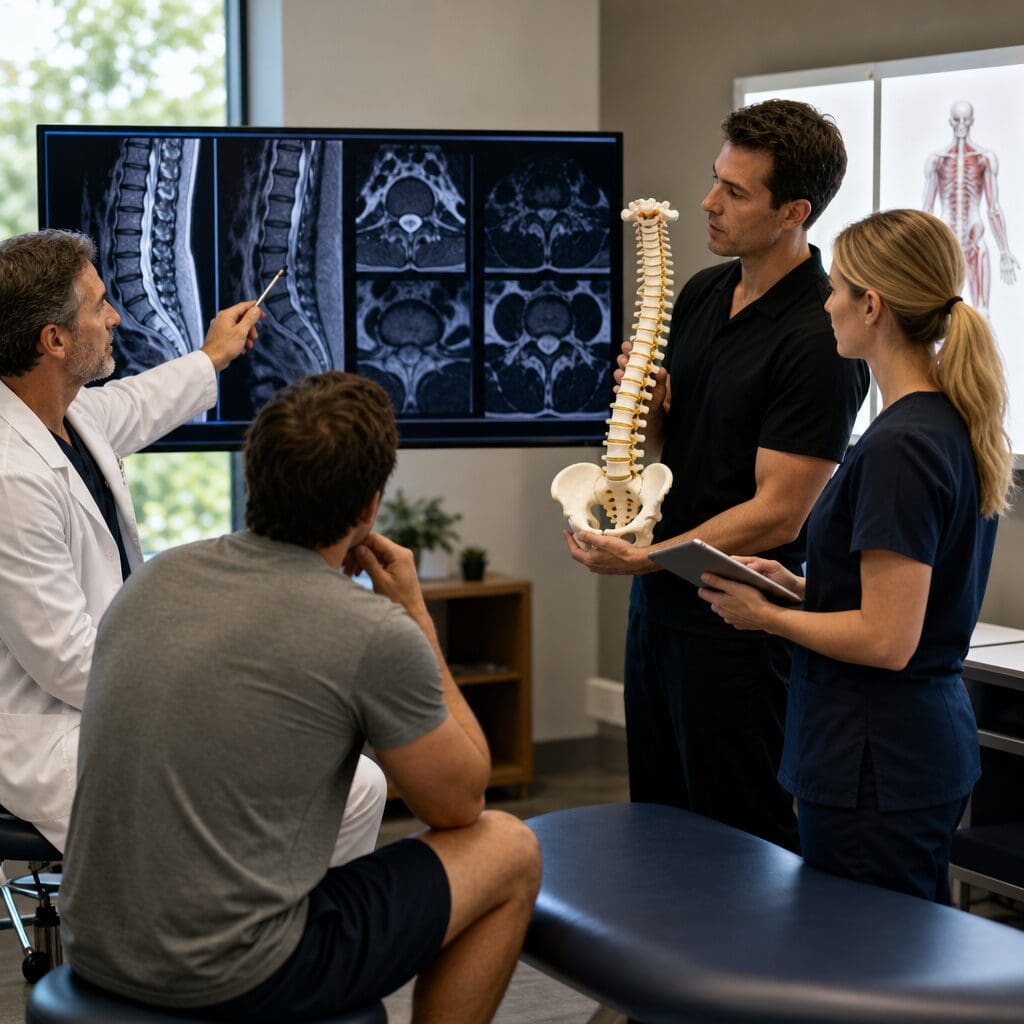
- Initial diagnostics, including advanced imaging review, neurological testing, and metabolic labs
- Structural correction through targeted adjustments and rehabilitation
- Regenerative therapies to support tissue recovery
- Neurological recalibration with biofeedback or neurofeedback when central sensitization is present
- Lifestyle and nutrition coaching to reduce systemic inflammation
Plans are reviewed at defined milestones. If a strategy is not producing measurable gains, we adjust rather than continuing on momentum.
What to do next: Bring your most recent imaging, lab work, and a list of every medication and supplement to your first visit. It speeds the diagnostic process considerably.
Conditions We Treat Without Surgery or Drugs
Our chronic back pain treatment programs serve patients with a wide range of diagnoses, many of whom were told their only options were surgery, long-term medication, or “learning to live with it.” Common conditions we address include:
- Herniated and bulging discs
- Spinal stenosis and degenerative disc disease (learn more about back and neck stenosis)
- Sciatica and radiculopathy
- Facet joint syndrome
- Chronic neck pain and cervicogenic headaches
- Peripheral neuropathy in the legs and feet
- Failed back surgery syndrome
- Sacroiliac joint dysfunction
We also work with patients whose spinal symptoms overlap with Type II diabetes, autoimmune inflammation, or hormonal imbalances. Treating the spine in isolation while ignoring these drivers is a common reason previous care stalled.
What to Expect During Your Regenerative Spinal Evaluation
Your first visit is designed to gather a complete picture rather than rush to a procedure. Expect to spend meaningful time with our team going through your history, prior treatments, and goals.
A typical evaluation includes:
- A detailed intake on pain patterns, sleep, activity tolerance, and prior interventions
- Postural and movement analysis from head to toe
- Neurological testing for reflex, sensory, and motor function
- Review of existing imaging or referral for additional studies when needed
- Metabolic and inflammatory lab work when clinically indicated
- A clear explanation of findings and a written care recommendation

You will leave with an understanding of what is driving your pain, what we believe is reversible, and what realistic timelines look like. No vague reassurances, no boilerplate treatment packages.
What to do next: Write down your top three functional goals before the appointment. “Walk 18 holes,” “sleep through the night,” or “lift my grandchild” gives us concrete targets to measure against.
Patient Outcomes and Quality-of-Life Improvements We Target
Pain scores matter, but they are not the whole story. We measure success through what patients can do again. That includes returning to work without midday flares, traveling without dreading the flight home, exercising consistently, and reducing or eliminating dependence on pain medication.
Specific quality-of-life outcomes we work toward include:
- Restored sleep quality and duration
- Improved walking tolerance and balance
- Reduced reliance on NSAIDs, opioids, or muscle relaxants
- Greater range of motion in the neck, mid-back, and lumbar spine
- Decreased numbness, tingling, and burning in the extremities
- Better energy and metabolic markers
Because our approach addresses root causes, results tend to build over weeks and stabilize over months. Many patients report that improvements continue well after active treatment ends, which is the hallmark of genuine healing rather than symptom suppression.
Schedule Your Consultation at the Pain Relief & Wellness Strategies Center
If you are weighing surgery, considering another round of injections, or simply tired of managing pain that never resolves, we would like to offer a different conversation. Our team will review your history, examine the full chain of contributors, and tell you honestly whether regenerative spinal care is a good fit.
To get started, visit drkenvinton.com to request a consultation. Bring your questions, your imaging, and your goals. We will handle the rest with the integrated medical and chiropractic expertise that defines our care.
Your spine has been working hard for a long time. Let us help it work well again.