
Best Non-Drug Pain Treatment Options for Lasting Relief in 2026
Why Chronic Pain Sufferers Need Drug-Free Solutions
Chronic pain rarely responds well to a single prescription pad. Opioids, NSAIDs, and muscle relaxers can dull symptoms temporarily, but they often introduce new problems: dependency, gastrointestinal damage, cognitive fog, and a slow drift away from the root cause. For someone who has lived with neuropathy, sciatica, or post-surgical pain for years, that trade-off becomes harder to accept.
The case for non-drug pain treatment in 2026 is stronger than ever. Insurance carriers are tightening opioid coverage, the CDC continues to recommend non-pharmacologic care as first line for most musculoskeletal pain, and patients are asking for solutions that actually heal tissue rather than mask it. We see this shift every week in our office. People want their function back, not just a quieter symptom.
What to do next: If your current plan relies entirely on medication, ask whether the underlying driver of your pain has ever been diagnosed. If the answer is no, that is the gap drug-free care is built to close.
Criteria We Use to Evaluate Effective Pain Treatments
Not every alternative therapy deserves a place in a serious treatment plan. When we vet a modality, we weigh it against five practical filters:
- Evidence base: Peer-reviewed studies showing measurable outcomes, not just testimonials.
- Mechanism clarity: A clear physiological reason the therapy should work for the specific condition.
- Safety profile: Low risk of adverse events compared with surgical or pharmaceutical alternatives.
- Durability: Results that hold for months or years, not days.
- Integration potential: Whether it complements other therapies in a coordinated plan.
A therapy that scores well on three of these but fails on durability gets used as a bridge, not a destination. This filter is why our clinic combines modalities rather than betting on any single intervention.
Takeaway: Before starting any new pain therapy, ask your provider to explain its mechanism and expected timeline in plain language. Vague answers are a red flag.
Chiropractic and Spinal Decompression Therapy
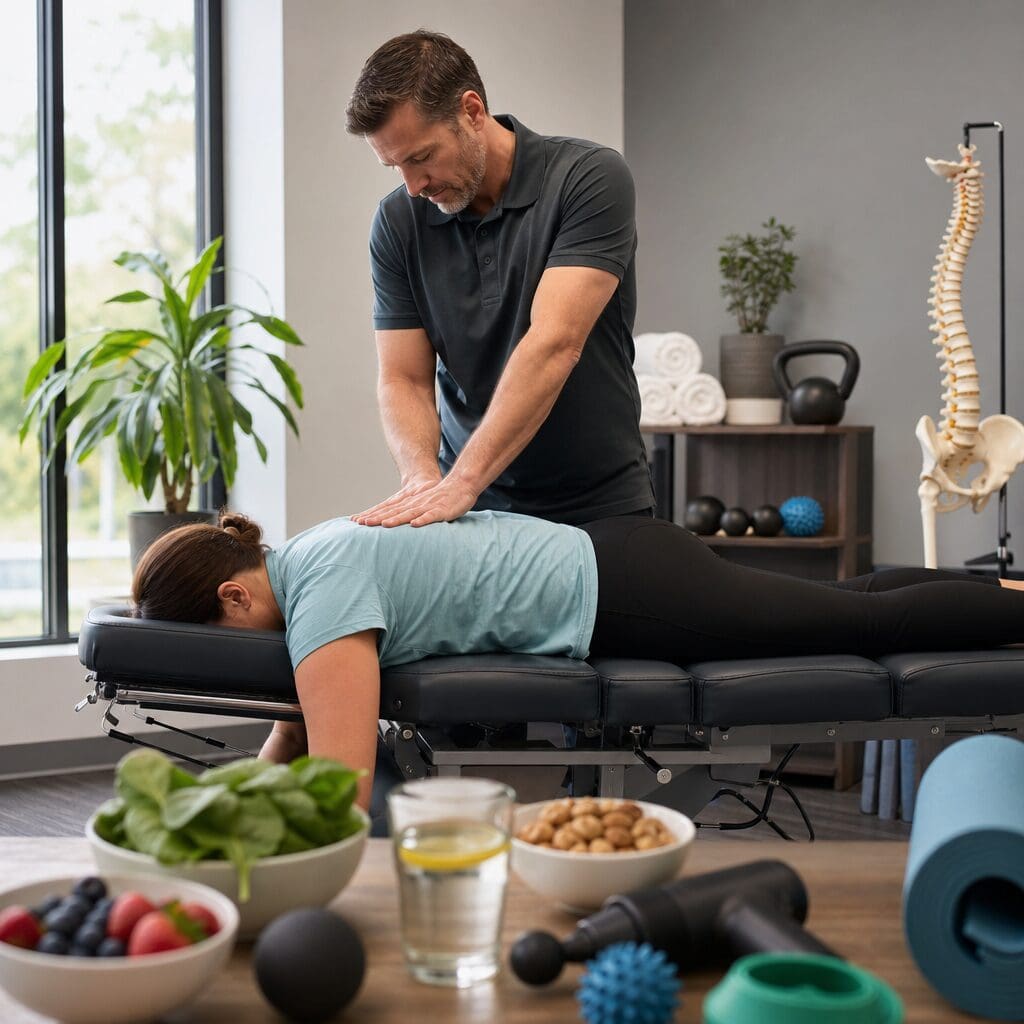
Mechanical back and neck pain is one of the most common reasons patients walk into our office, and it is also one of the most responsive to hands-on care. Chiropractic adjustments restore joint mobility, reduce muscle guarding, and improve neurological signaling along the spine. When disc involvement is present, we add non-surgical spinal decompression to gently separate vertebral segments, lowering intradiscal pressure and pulling herniated material back toward center.
A typical decompression protocol runs 20 to 25 sessions over six to eight weeks, paired with rehabilitative exercise and soft tissue work. Patients with documented disc bulges, stenosis, or facet syndrome often report meaningful relief within the first two weeks.
What to do next: If an MRI shows disc pathology and surgery has been recommended, request a consultation about decompression before scheduling the operating room.
Non-Surgical Neuropathy Treatment Protocols
Peripheral neuropathy used to carry a grim prognosis: gabapentin, lidocaine patches, and a slow decline in sensation. We approach it differently. Our non-surgical neuropathy protocol combines electrical cell signaling therapy, infrared light, nutritional support targeting nerve regeneration, and balance retraining to rebuild what the nerves have lost.
The goal is not to numb symptoms but to restore blood flow to the vasa nervorum, the tiny vessels that feed peripheral nerves. When circulation improves, nerves often begin to repair, especially in patients caught before complete axonal loss.
Candidates who tend to respond best:
- Diabetic neuropathy with symptoms under five years old
- Chemotherapy-induced peripheral neuropathy
- Idiopathic small-fiber neuropathy
- Post-surgical nerve irritation
Takeaway: Earlier intervention produces better outcomes. If you have numbness, burning, or tingling in your hands or feet, do not wait until you are falling to ask for evaluation.
Regenerative Medicine and Soft Tissue Therapies
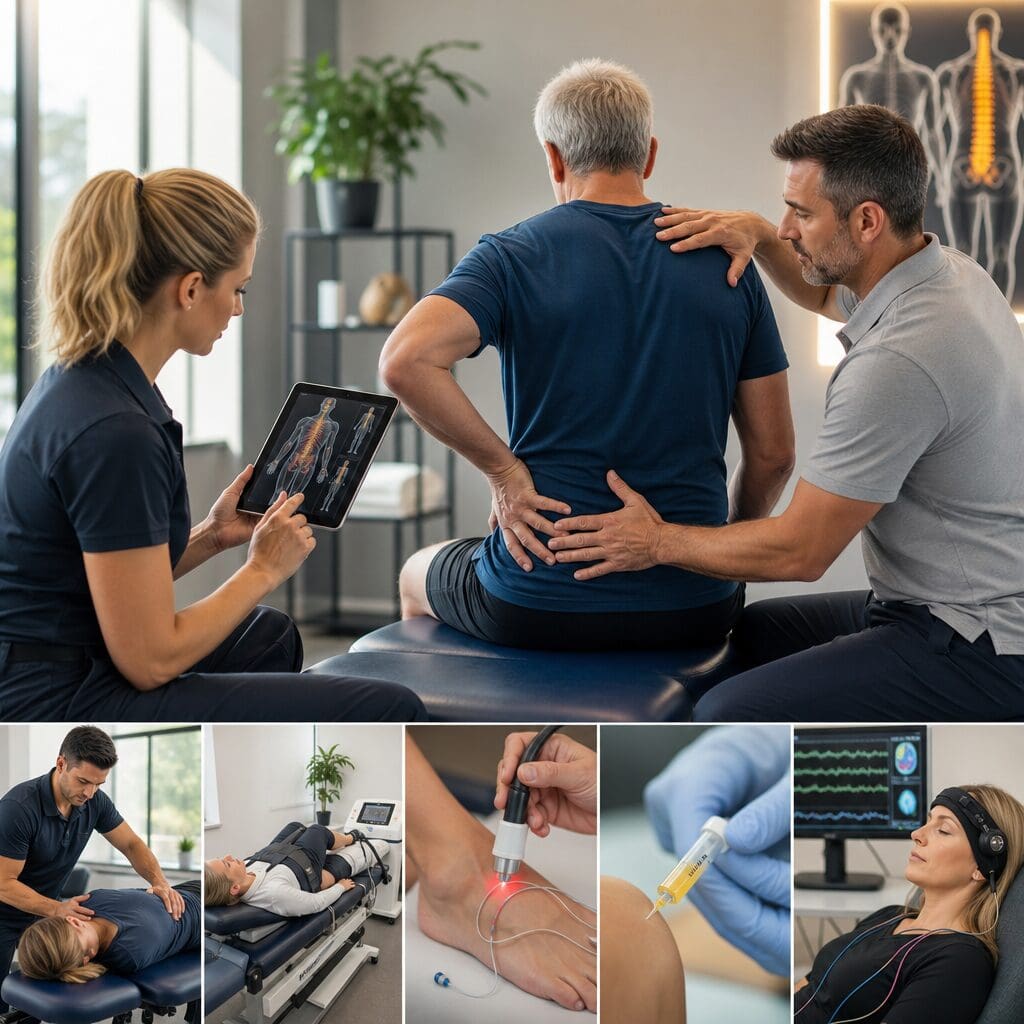
When tendons, ligaments, or joint cartilage are the source of pain, the body needs raw materials and stimulus to rebuild. Regenerative therapies provide both. We use targeted injections, shockwave therapy, and class IV laser to trigger a controlled healing response in tissues that have stalled in a chronic inflammatory state.
Shockwave, for example, has strong evidence for plantar fasciitis, tennis elbow, and calcific shoulder tendinopathy. Class IV laser accelerates mitochondrial activity in injured cells, shortening recovery from sprains and strains. These tools fit naturally alongside chiropractic and rehab because they address the tissue layer that manual therapy alone cannot fully reach.
What to do next: If you have a tendon injury that has lingered past three months, that is the window where regenerative therapy tends to outperform rest and anti-inflammatories.
Neurofeedback and Biofeedback for Pain Modulation
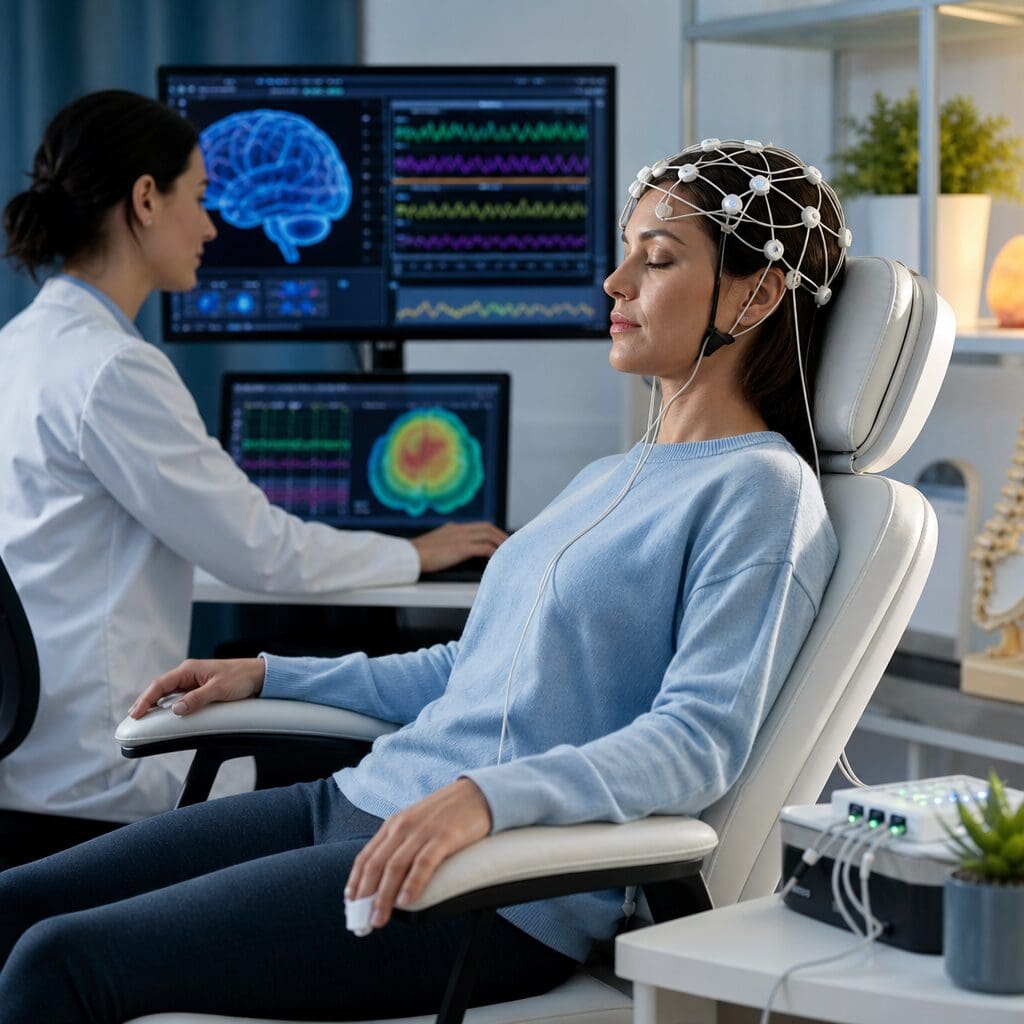
Pain is processed in the brain, and the brain can be trained. Neurofeedback therapy uses real-time EEG monitoring to teach the nervous system healthier patterns, calming the overactive pain circuits that drive central sensitization. Biofeedback adds heart rate variability and muscle tension training, giving patients direct control over autonomic responses that amplify pain.
This category is especially valuable for fibromyalgia, chronic migraines, complex regional pain syndrome, and pain with a strong anxiety or sleep component. Patients often notice better sleep within the first few sessions, and sleep alone is a powerful pain reducer.
Takeaway: If your pain spikes with stress or poor sleep, the nervous system itself is part of the problem. Training it directly is more effective than trying to outrun it.
Functional Medicine for Inflammation and Metabolic Pain Drivers
Pain that flares without clear mechanical cause often has a metabolic engine behind it. Insulin resistance, gut dysbiosis, vitamin D deficiency, and chronic low-grade inflammation all lower the threshold at which tissues hurt. Our functional medicine team runs comprehensive lab panels to identify these drivers and builds nutrition, supplementation, and lifestyle plans to reverse them.
This is also where our Type II diabetes reversal work intersects with pain care. Patients who lower their A1C frequently report dramatic improvement in joint pain, neuropathy symptoms, and energy. The body works as one system, and treating it that way produces results that single-discipline care cannot match.
What to do next: Ask for hsCRP, fasting insulin, vitamin D, and a comprehensive metabolic panel. These four markers tell a story most standard physicals miss.
Side-by-Side Comparison of Pain Relief Approaches
| Approach | Best For | Typical Timeline | Drug-Free | |—|—|—|—| | Opioids/NSAIDs | Acute, short-term pain | Days to weeks | No | | Surgery | Structural failure, nerve compression | Months recovery | Usually no | | Chiropractic + Decompression | Disc, joint, spine pain | 6 to 8 weeks | Yes | | Neuropathy Protocol | Peripheral nerve damage | 3 to 6 months | Yes | | Regenerative Therapy | Tendon, ligament, cartilage | 4 to 12 weeks | Yes | | Neurofeedback/Biofeedback | Central sensitization, stress-driven pain | 10 to 20 sessions | Yes | | Functional Medicine | Inflammatory, metabolic pain | 3 to 6 months | Yes |
Single-modality care leaves gaps. A patient with diabetic neuropathy and a herniated disc needs nerve regeneration, decompression, and metabolic reversal at the same time. That is precisely the problem an integrated clinic is designed to solve.
How the Vinton Method Integrates Every Proven Therapy
Most clinics offer one tool. We built The Vinton Method to offer the full toolkit under one roof, coordinated by a team of MDs and chiropractors who actually talk to each other about your case. The process starts with a head-to-toe evaluation that maps every contributing factor: structural, neurological, metabolic, and lifestyle.
From there we sequence therapies in the order your body can use them. A patient with chronic low back pain and elevated blood sugar might begin with decompression and functional medicine simultaneously, add regenerative therapy once inflammation drops, and finish with neurofeedback to recalibrate the nervous system. Each step builds on the previous one rather than competing with it.
This integration is what makes our outcomes durable. We are not chasing symptoms across specialties, we are resolving the network of causes that produced them.
Your Next Step Toward Lasting Pain Relief With Our Team
If you have tried medications, injections, or even surgery without lasting relief, the missing piece is almost always coordination. A single therapy, no matter how good, cannot resolve pain that has multiple drivers. The Pain Relief and Wellness Strategies Center exists for exactly this reason.
Here is why our clinic is the right choice for chronic pain sufferers in 2026:
- One team, every modality. MDs, chiropractors, and functional medicine providers under one roof, sharing one chart.
- The Vinton Method evaluation. A proprietary head-to-toe assessment that identifies every contributing factor before treatment begins.
- Proven non-surgical protocols for neuropathy, spinal pain, and metabolic dysfunction with documented outcomes.
- Regenerative and root-cause focus rather than symptom suppression.
- Personalized sequencing so therapies build on each other instead of competing.
You do not need another prescription or another opinion. You need a plan that treats the whole picture. Schedule a consultation with our team and let us show you what coordinated, drug-free pain care can do.