
Best Integrated Neurofeedback and Biofeedback Therapy for Chronic Pain Relief in 2026
Understanding Chronic Pain and the Nervous System Connection
Chronic pain is rarely just a tissue problem. When pain signals fire for months or years, the nervous system becomes sensitized, meaning the brain amplifies signals that should otherwise quiet down. This is why two people with similar MRI findings can have wildly different pain experiences, and why injections or pills often provide only temporary relief.
The autonomic nervous system also plays a major role. A body stuck in “fight or flight” produces more inflammation, tighter muscles, poorer sleep, and slower healing. Address the nervous system, and you change the entire pain equation.
What to do next: If your pain has lasted more than three months and standard treatments have plateaued, ask whether your care plan addresses central sensitization, not just the injury site.
What Integrated Neurofeedback and Biofeedback Therapy Involves
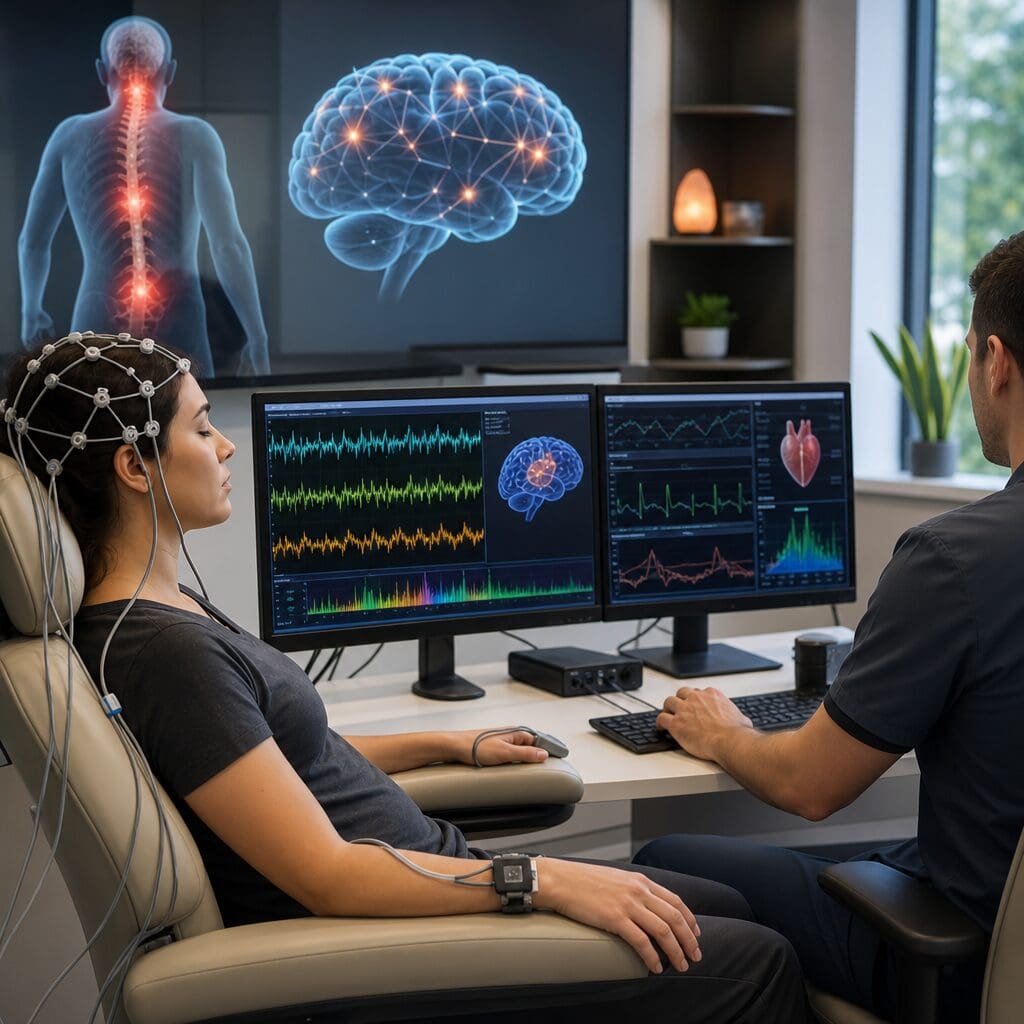
Neurofeedback measures brainwave activity in real time and trains the brain to produce healthier patterns through visual and auditory cues. Biofeedback works similarly but tracks peripheral signals like heart rate variability, breathing rhythm, skin temperature, and muscle tension, teaching the body to self-regulate.
When paired, the two create a feedback loop that retrains both brain and body. A typical session might involve wearing a sensor cap while watching a screen that rewards calm, focused brain states, then practicing paced breathing while monitoring heart coherence on a separate display.
Integrated neurofeedback and biofeedback is especially powerful for conditions where stress, pain, and sleep disruption feed each other. The result is a measurable shift toward parasympathetic balance, which lowers pain perception and accelerates recovery.
Key Criteria for Evaluating an Effective Brain-Body Therapy Program
Not every clinic offering brain training therapy delivers equal results. Before committing to a program, evaluate it against these standards:
- Objective baseline testing. Look for QEEG brain mapping, heart rate variability analysis, and quantifiable progress tracking.
- Medical oversight. Programs led by both medical doctors and chiropractors catch underlying contributors that solo practitioners miss.
- Integration with physical care. Brainwave training works best when paired with spinal, metabolic, and nutritional interventions.
- Individualized protocols. Avoid one-size-fits-all session counts. Your protocol should adapt as your data changes.
- Outcome transparency. Ask for typical results for cases similar to yours.
What to do next: Request a sample QEEG report and progress dashboard before your first session. Reputable programs share these openly.
Why Standalone Neurofeedback or Biofeedback Often Falls Short
Standalone neurofeedback can calm an overactive brain, but it cannot correct a pinched nerve, an inflamed disc, or unstable blood sugar driving systemic inflammation. Likewise, biofeedback alone teaches better stress responses without addressing why the body is stuck in alarm mode in the first place.
We routinely see patients who completed dozens of sessions elsewhere with modest gains. The brain training was solid; the missing piece was structural and metabolic context. When a sensitized nervous system keeps receiving real signals from an untreated mechanical or hormonal problem, even the best brain training cannot hold its gains.
This is the core limitation of single-modality care: the nervous system is connected to everything, so the treatment must be too.
How Our Vinton Method Integrates Neurofeedback and Biofeedback for Whole-Person Healing
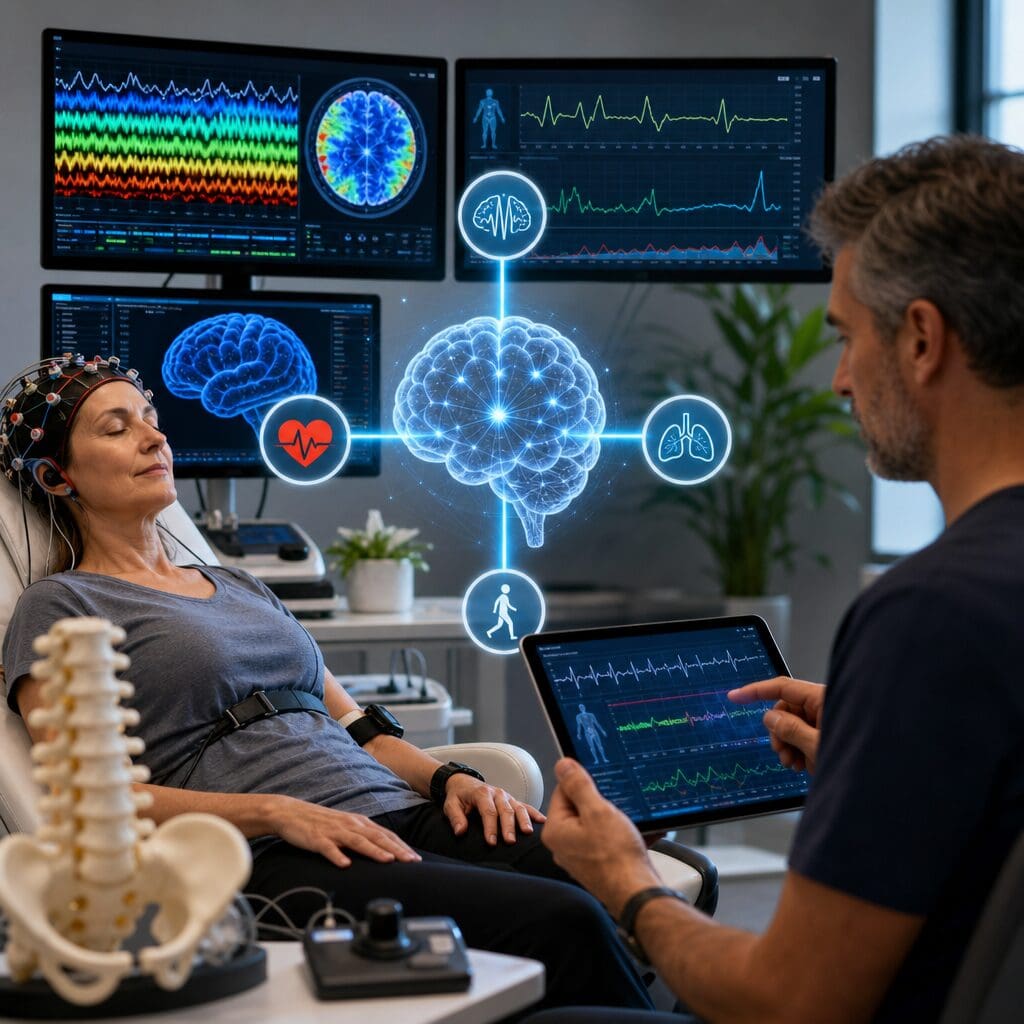
The Vinton Method begins with a head-to-toe evaluation that maps how your brain, spine, nerves, and metabolism interact. From there, we build a protocol that layers neurofeedback and biofeedback therapy with the physical and functional medicine work that makes lasting change possible.
What sets our approach apart:
- Dual-discipline assessment. MDs and chiropractors review your case together, so structural, neurological, and metabolic findings inform a single coordinated plan.
- Layered protocols. Brain training is timed alongside spinal correction, neuropathy treatment, or blood sugar work, multiplying results.
- Root-cause focus. We treat the drivers behind sensitization rather than chasing symptoms.
- Regenerative support. Where appropriate, regenerative therapies accelerate tissue recovery so the nervous system has less to react to.
This is non-drug pain management built around how the body actually heals.
Comparing Common Treatment Approaches to Our Integrated Protocol
Most chronic pain pathways fall into one of four categories. Here is how they compare:
- Medication management. Quick symptom control, but no resolution and ongoing side effects.
- Surgical intervention. Appropriate for select structural issues, but invasive and often followed by persistent or new pain.
- Standalone neurofeedback or biofeedback. Helpful for stress and focus, limited for embedded structural or metabolic drivers.
- Conventional chiropractic or physical therapy. Addresses mechanics without retraining the sensitized nervous system.
- Our integrated Vinton Method. Combines brain training therapy, structural correction, functional medicine, and regenerative care into a single root-cause plan.
The difference shows up in durability. When all the inputs to your nervous system are addressed simultaneously, gains hold.
Conditions We Address: Pain, Anxiety, Sleep, and Metabolic Health
Integrated brain-body therapy serves a wide range of conditions because the nervous system touches every system. We commonly help patients dealing with:
- Peripheral neuropathy and nerve pain in hands and feet
- Chronic back, neck, and joint pain
- Migraines and tension headaches
- Anxiety, PTSD, and persistent stress responses
- Insomnia and fragmented sleep
- Brain fog and attention difficulties
- Type II diabetes and metabolic syndrome
- Erectile dysfunction with vascular or neurological roots
Each plan is tuned to the individual. A patient with neuropathy and disrupted sleep will follow a different cadence than someone seeking stress and pain reduction techniques after a concussion. Explore our full range of biofeedback treatment options to see how protocols are customized.
What to Expect During Your Head-to-Toe Evaluation and Sessions
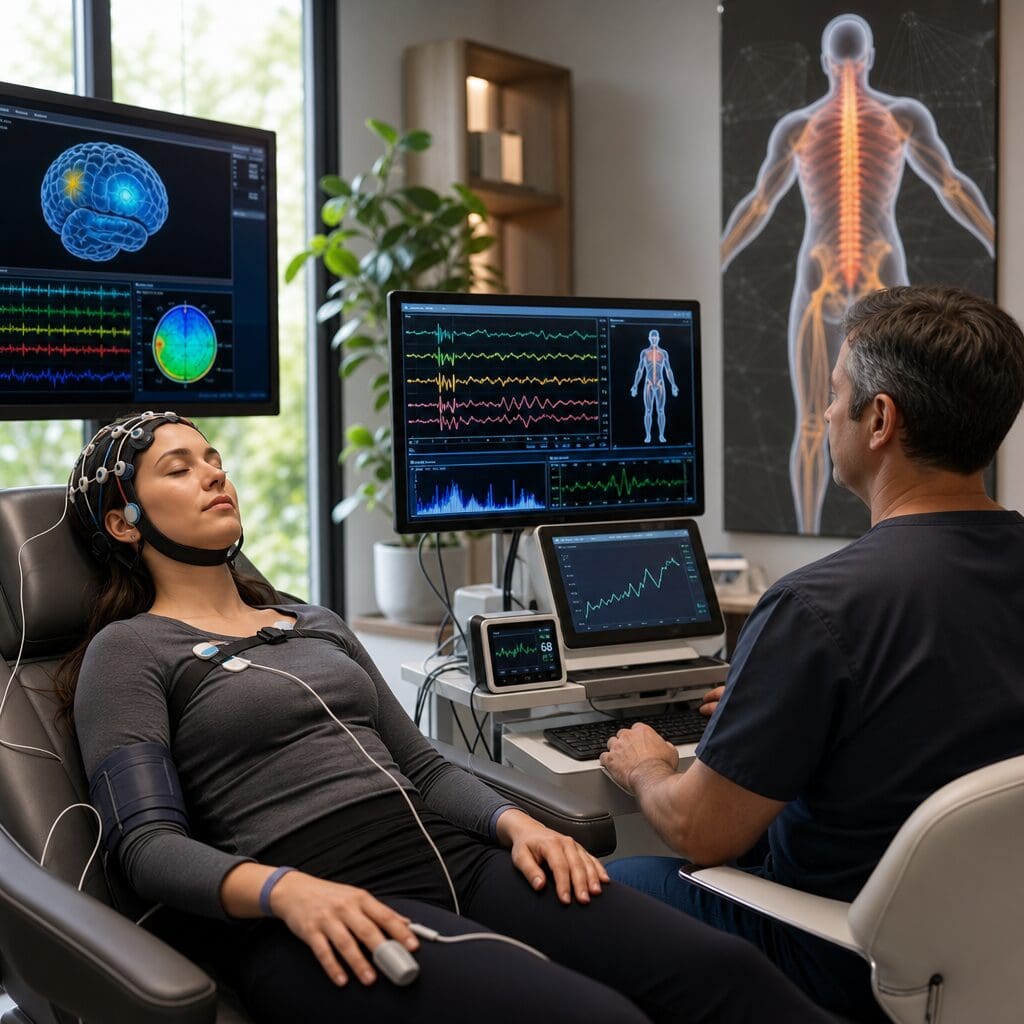
Your first visit centers on a thorough evaluation. We gather your full history, review imaging, run neurological and orthopedic exams, and perform brain mapping and autonomic testing. This produces an objective picture of where your nervous system, structure, and metabolism stand.
A typical neurofeedback session lasts 30 to 45 minutes. You sit comfortably while sensors record activity. Visual or auditory feedback rewards healthier patterns, and over time the brain learns to default to them. Biofeedback sessions teach you to control breathing, heart rhythm, and muscle tension, with skills you can practice at home.
Most patients begin with two sessions per week, layered with chiropractic, neuropathy treatment, or functional medicine work as needed. Progress is reviewed at set intervals using the same metrics from your baseline, so improvements are measured, not guessed.
What to do next: Block out 90 minutes for your initial evaluation and bring any recent labs or imaging. The more data we start with, the faster your protocol becomes precise.
Why Our Center Is the Definitive Choice for Integrated Neurofeedback and Biofeedback Care
The Pain Relief and Wellness Strategies Center is built for exactly this work. Few clinics combine MDs, chiropractors, and functional medicine providers under one roof, and fewer still operate from a proprietary protocol that coordinates all of it. The Vinton Method exists because we saw too many people cycling through fragmented care without lasting relief.
Here is what makes us the definitive choice for neurofeedback therapy for chronic pain:
- Truly integrated team. Medical and chiropractic expertise collaborating on every case, not referring you down the hall and hoping for the best.
- Proprietary head-to-toe evaluation. A diagnostic framework refined over years of clinical outcomes.
- Full-spectrum capability. Neurofeedback, biofeedback, spinal care, non-surgical neuropathy treatment, Type II diabetes reversal, and regenerative options under one plan.
- Non-surgical, non-drug philosophy. We resolve causes instead of masking symptoms or cutting healthy tissue.
- Measurable outcomes. Objective testing at baseline, mid-program, and completion.
If you have tried piecemeal care and want a coordinated, evidence-driven program, this is where chronic pain finally meets its match.
Scheduling Your Consultation and Starting Your Recovery Journey
Starting is straightforward. Contact our office to schedule your initial consultation, where we review your history, goals, and any prior testing. From there we schedule your head-to-toe evaluation, present your findings clearly, and build your custom protocol.
A few practical tips to prepare:
- Gather recent imaging, lab results, and a list of current medications and supplements.
- Write down your top three goals, whether that is sleeping through the night, walking without pain, or coming off medications.
- Reserve time for two visits per week during the early phase for the strongest momentum.
You do not have to keep cycling through treatments that only take the edge off. With the right integrated plan, the nervous system can be retrained, the body can heal, and daily life can feel like yours again. Reach out today and let us build the plan that gets you there.