
Chronic Neuropathy Treatment in 2026: Why the Vinton Method Outperforms Conventional Care
Understanding Chronic Neuropathy and Its Impact on Daily Life
Chronic neuropathy is more than occasional tingling in the hands or feet. It is ongoing nerve damage that disrupts how signals travel between the brain, spinal cord, and peripheral tissues. For many of our patients, that translates into burning sensations at night, numbness that makes stairs feel unsafe, sharp electrical pains, and a loss of balance that quietly shrinks their world.
The downstream effects compound quickly. Sleep suffers, exercise becomes risky, diabetes management gets harder, and simple tasks like buttoning a shirt or feeling the gas pedal turn into daily frustrations. According to the National Institutes of Health, more than 20 million Americans live with some form of peripheral neuropathy, and many never receive a workup that goes beyond a prescription pad.
Quick takeaway: If symptoms have lasted more than three months or are worsening, treat it as a progressive condition. Waiting rarely improves outcomes, but a thorough evaluation often does.
Why Conventional Neuropathy Treatments Often Fall Short
Most patients arrive at our office having already tried gabapentin, pregabalin, duloxetine, or a rotating mix of pain relievers. These medications can blunt symptoms, but they do not repair nerves, restore circulation, or address the metabolic drivers behind the damage. When the prescription wears off, the pain returns, often with added side effects like brain fog, weight gain, or dizziness.
Conventional care also tends to compartmentalize the problem. A neurologist may focus on nerve conduction studies, an endocrinologist on blood sugar, and an orthopedist on the spine, with no one coordinating the bigger picture. Patients are left to translate between specialists while their nerves continue to deteriorate.
Quick takeaway: If your current plan only manages symptoms, ask what is being done to slow, stop, or reverse the underlying nerve damage.
The Limitations of Symptom-Based Care for Nerve Damage
Symptom-based care assumes the goal is comfort. For nerve tissue, that assumption is risky. Peripheral nerves can regenerate, but only when the environment around them supports healing: adequate blood flow, stable glucose, healthy mechanical loading on the spine, and reduced inflammation. None of these are addressed by a pill that only dulls signaling.
We routinely see patients who were told “nothing more can be done” because their medications stopped working. In most cases, what actually stopped working was the strategy, not their biology. Their vascular supply, B-vitamin status, spinal mechanics, and metabolic health had never been evaluated together.
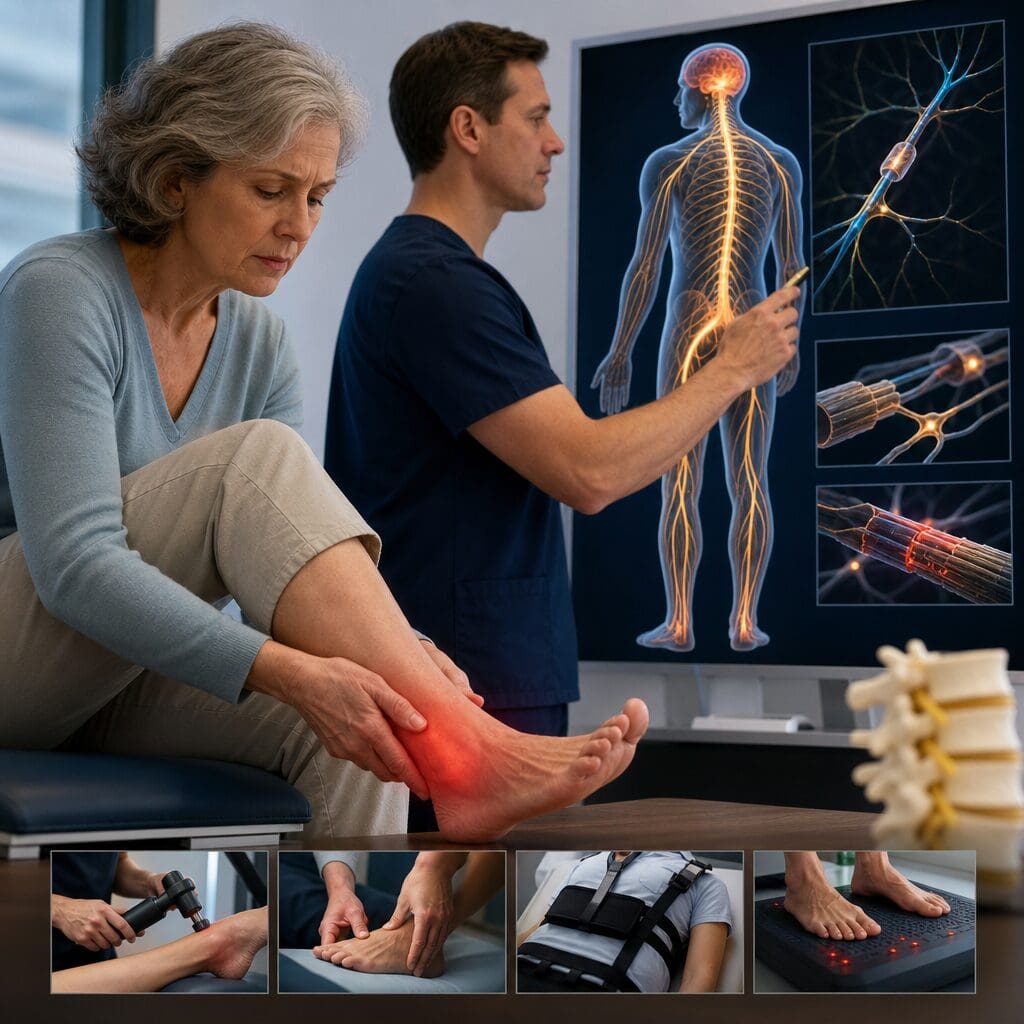
Quick takeaway: A treatment plan that never measures nerve function, circulation, or metabolic markers is not really a plan. It is a holding pattern.
Our Vinton Method: A Head-to-Toe Approach to Neuropathy
The Vinton Method is our proprietary head-to-toe evaluation built specifically for patients with complex, stubborn conditions like chronic neuropathy. Rather than treating the foot or the hand in isolation, we map every system that influences nerve health: cardiovascular, metabolic, structural, neurological, and lifestyle.
That mapping then drives a personalized chronic neuropathy treatment plan. Two patients with identical numbness patterns may receive very different protocols because their root causes differ. One may need aggressive blood sugar correction and vascular support; another may need neurospinal alignment work to relieve nerve root compression that has been silently feeding the problem for years.
Quick takeaway: Personalization is not a marketing word in our office. It is what determines whether your nerves get the specific inputs they need to recover.
How We Combine Medical and Chiropractic Expertise for Lasting Relief
Our team integrates medical doctors and chiropractors in the same building, working from the same chart. That structure matters. A physician can order labs, prescribe when appropriate, and manage medical comorbidities. A chiropractor can correct spinal and joint mechanics that contribute to nerve compression and poor signaling.
When both perspectives sit at the same table, patients stop falling through the gaps. For example, a diabetic patient with foot numbness might receive functional medicine support to stabilize glucose, regenerative therapies to support nerve repair, and targeted spinal care to relieve lumbar nerve root irritation, all coordinated in one plan.
Quick takeaway: Integrative neuropathy care is most effective when the disciplines share decisions, not just referrals.
Non-Surgical, Non-Drug Therapies We Use to Restore Nerve Function
We focus on drug-free neuropathy solutions that create the conditions for nerves to repair. Depending on your evaluation, your protocol may include:
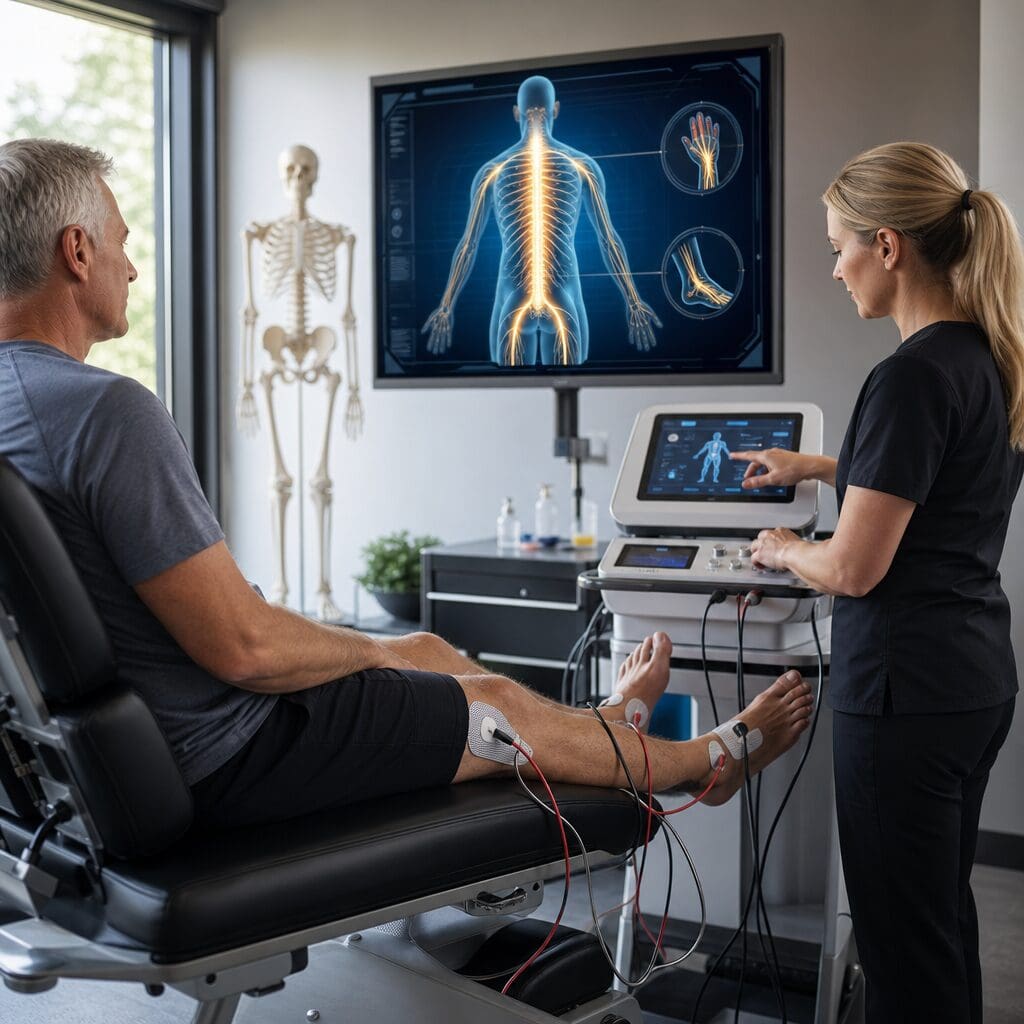
- Electroanalgesia and advanced electrotherapy to stimulate damaged nerves and reduce pain signaling
- Infrared and low-level laser therapy to improve microcirculation around starved nerve endings
- Vibration and proprioceptive training to restore balance and reduce fall risk
- Neurofeedback and biofeedback to retrain the nervous system’s response to chronic pain
- Targeted nutritional therapy including methylated B vitamins, alpha-lipoic acid, and other evidence-supported nutrients
- Chiropractic adjustments and decompression to relieve mechanical contributors to nerve pain
- Regenerative therapies that support tissue repair at the cellular level
These are not standalone gimmicks. They are sequenced and combined based on what your nerves and tissues actually need. Patients who want a deeper look at neuropathy treatment options can review how we structure care in the hands and feet specifically.
Quick takeaway: Effective non-surgical neuropathy therapy is layered. One modality rarely moves the needle; the right combination usually does.
Addressing Root Causes: Metabolic, Vascular, and Structural Factors
Three categories drive most chronic neuropathy cases we see: metabolic dysfunction, vascular insufficiency, and structural compression. Ignoring any one of them undermines progress in the others.
- Metabolic: Type II diabetes, prediabetes, insulin resistance, thyroid imbalance, and nutrient deficiencies starve nerves of fuel and repair materials. Our functional medicine programs include Type II Diabetes reversal protocols that directly support nerve recovery.
- Vascular: Nerves require steady microcirculation. Poor blood flow from arterial disease, sedentary patterns, or inflammation accelerates damage. We assess and rebuild that supply.
- Structural: Disc bulges, spinal stenosis, and joint misalignment can compress nerve roots, mimicking or worsening peripheral neuropathy. Correcting these mechanics is often the missing piece.
Quick takeaway: Ask your provider which of these three areas has been formally evaluated. If the answer is “none” or “one,” your plan likely has blind spots.
What to Expect During Your Neuropathy Evaluation With Us
Your first visit is built around understanding, not upselling. We start with a detailed history, including the timeline of symptoms, prior treatments, medications, and lifestyle factors. From there, we conduct a head-to-toe physical and neurological examination, measure nerve sensitivity and balance, and review or order labs that reveal metabolic and inflammatory contributors.
You will leave with a clear picture of:
- What is driving your nerve pain
- Which systems are contributing and to what degree
- Whether you are a candidate for our non-surgical neuropathy therapy programs
- A realistic projection of timeframes and expected milestones
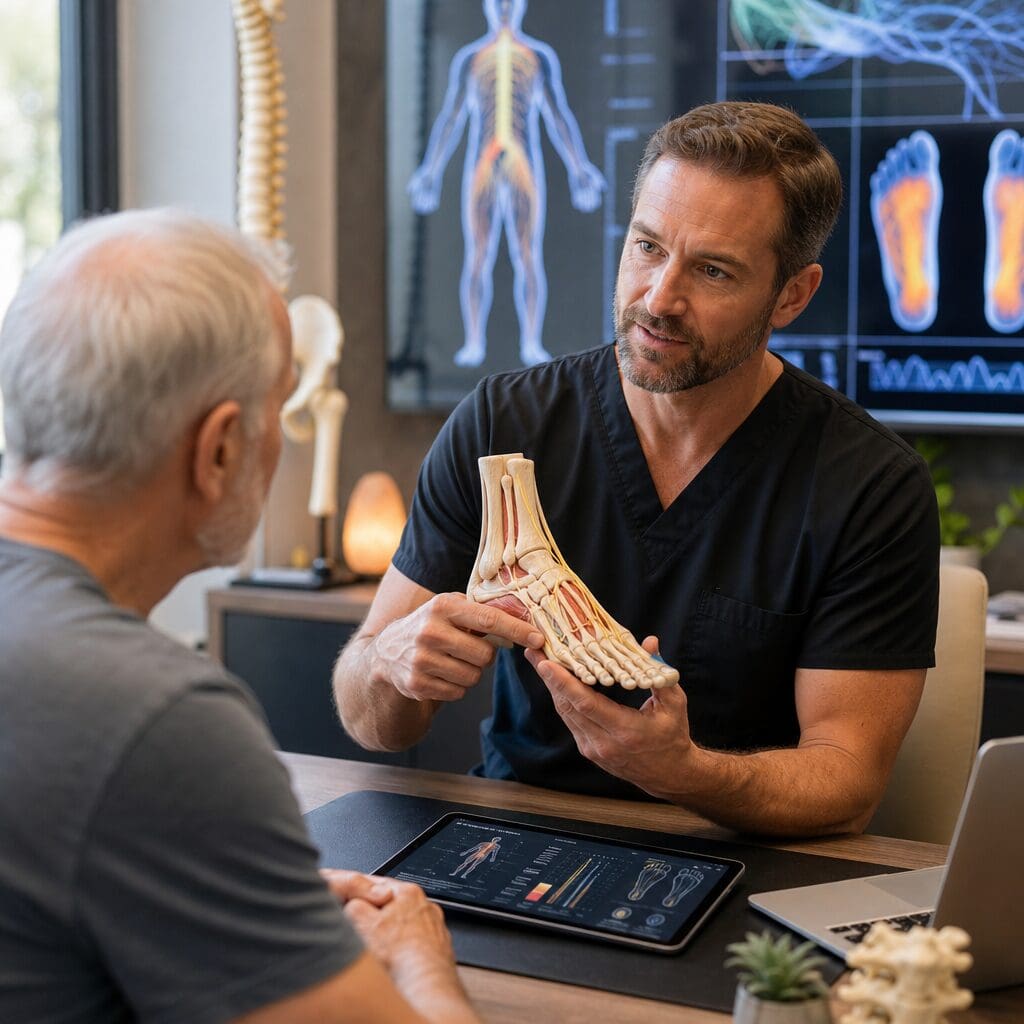
We do not promise miracles. We do promise honest answers and a plan grounded in your actual findings.
Quick takeaway: Bring a list of current medications, recent labs, and a written timeline of symptoms. It makes the first visit dramatically more productive.
Patient Outcomes and Quality-of-Life Improvements We Help Achieve
The goals patients bring us are concrete: sleep through the night, walk the dog without stumbling, feel the floor again, get off medications that cause side effects, return to golf or gardening, or simply stop dreading bedtime. These are the outcomes we track.
Patients who complete our programs frequently report measurable gains in sensation, reduced burning and tingling, improved balance scores, better blood sugar control, and reduced or eliminated reliance on neuropathy medications. Just as important, many regain confidence in their bodies, which has its own ripple effect on mood, activity, and independence.
Quick takeaway: Define what success looks like for you before treatment begins. Specific goals make progress measurable and motivation easier to sustain.
Scheduling Your Consultation at the Pain Relief and Wellness Strategies Center
If chronic neuropathy is limiting your life and your current plan is not changing the trajectory, a second opinion grounded in integrative neuropathy care is worth your time. Our team at the Pain Relief and Wellness Strategies Center will evaluate you head to toe, explain what we find in plain language, and recommend only the therapies your case actually calls for.
To get started:
- Visit drkenvinton.com to learn more about our approach
- Call our office to request a neuropathy consultation
- Gather your recent labs, imaging, and medication list before your visit
Nerve pain rarely improves on its own, but with the right plan it often improves more than patients expect. We would be glad to help you find out what is possible in your case.