
Neurofeedback for Chronic Pain Relief and Cognitive Performance: A Drug-Free Path to Healing
The Hidden Link Between Chronic Pain and Brain Function
Chronic pain is not only a problem of damaged tissue or pinched nerves. It is also a problem of how the brain processes signals. When pain persists for months or years, the central nervous system becomes sensitized, meaning the brain amplifies pain messages even after the original injury has healed. Researchers call this central sensitization, and it helps explain why two people with similar MRI findings can experience vastly different levels of suffering.
Brain imaging studies show that long-term pain alters activity in regions tied to attention, emotion, and sleep. That is why chronic pain so often arrives with brain fog, anxiety, and exhaustion. If you treat only the body and ignore the brain, you address half the problem.
Takeaway: If your pain has lasted more than three months, ask your provider how they plan to address central nervous system involvement, not just the injury site.
What Neurofeedback Is and How It Works
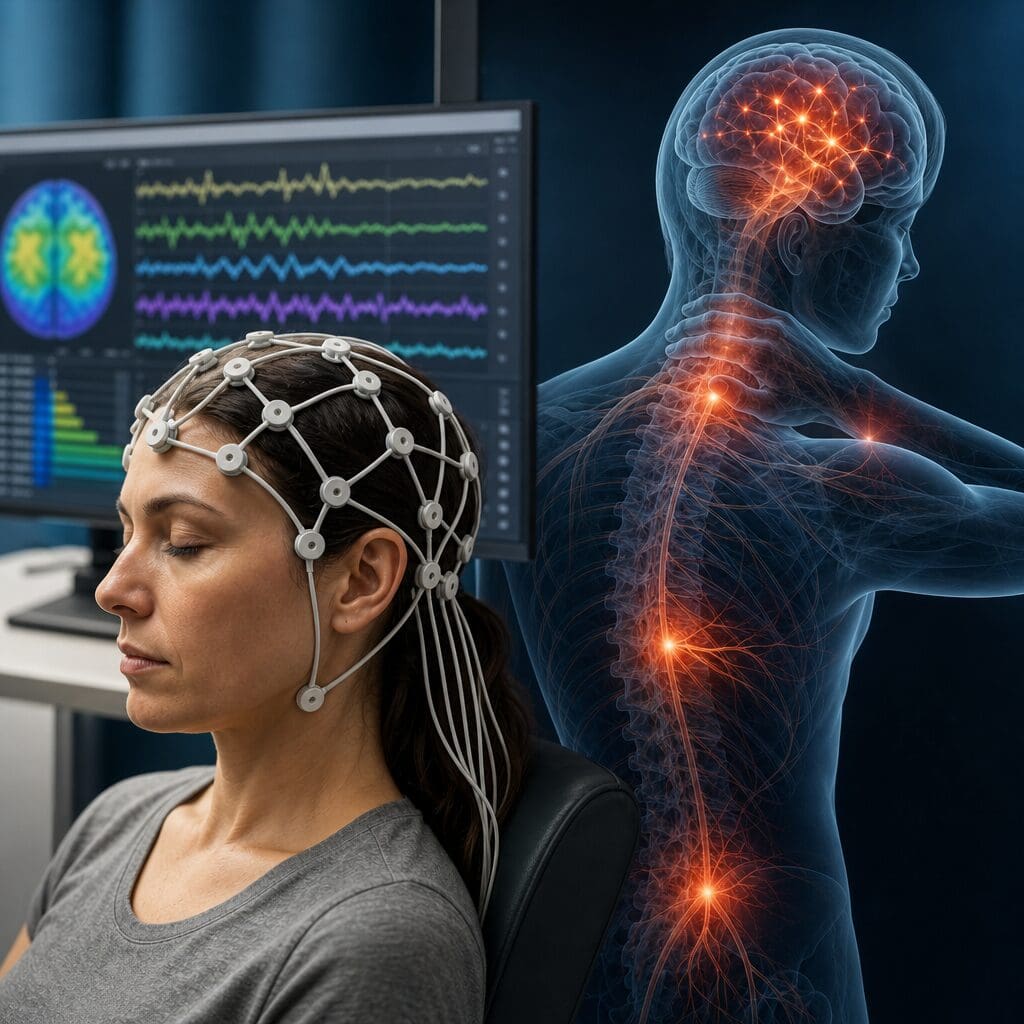
Neurofeedback is a form of brain training therapy that uses real-time monitoring of your brainwaves to teach your nervous system healthier patterns. Small sensors are placed on the scalp to read electrical activity (an EEG), and software translates that activity into visual or audio feedback, often a video, game, or sound that responds to your brain state.
When your brain produces the patterns associated with calm focus, the feedback rewards you. When it drifts toward dysregulated patterns linked to pain, stress, or distraction, the feedback fades. Over repeated sessions, the brain learns to favor the healthier patterns on its own, much like building a muscle through guided practice.
It is non-invasive, drug-free, and painless. You are not being shocked or stimulated. You are simply learning.
Why Traditional Pain Management Often Falls Short
Standard pain care typically follows a familiar path: anti-inflammatories, muscle relaxers, opioids, injections, and eventually surgery. These tools have a place, but they often target symptoms rather than causes, and they carry real risks including dependency, gastrointestinal damage, and surgical complications.
Common gaps we see in conventional approaches include:
- Limited attention to how the brain processes and amplifies pain
- One-size-fits-all protocols that ignore metabolic and lifestyle drivers
- Short appointment windows that prevent root-cause investigation
- Repeated procedures without addressing why pain keeps returning
Patients who have cycled through multiple specialists often arrive at our center frustrated, asking the same question: why does the pain keep coming back? The answer usually involves an untreated piece of the puzzle, and the brain is one of the most overlooked.
How Neurofeedback Retrains the Brain to Reduce Pain Signals
Chronic pain tends to lock the brain into high-arousal, low-recovery patterns. Excessive fast-wave activity can keep the nervous system on alert, while too little slow-wave activity makes deep rest and tissue repair difficult. Neurofeedback works by guiding the brain back toward balance.
Through repeated training, patients commonly notice:
- Reduced pain intensity and fewer flare-ups
- Better sleep quality, which speeds physical healing
- Lower baseline stress and muscle tension
- Improved emotional regulation around pain triggers
Think of it as rehabilitation for the nervous system. Just as physical therapy retrains a weak knee, neurofeedback retrains an overactive pain network. The result is a brain that responds to ordinary sensations as ordinary, rather than as threats.
Takeaway: Ask whether your provider measures progress with objective brain maps, not just symptom checklists.
Cognitive Benefits: Focus, Memory, and Mental Clarity
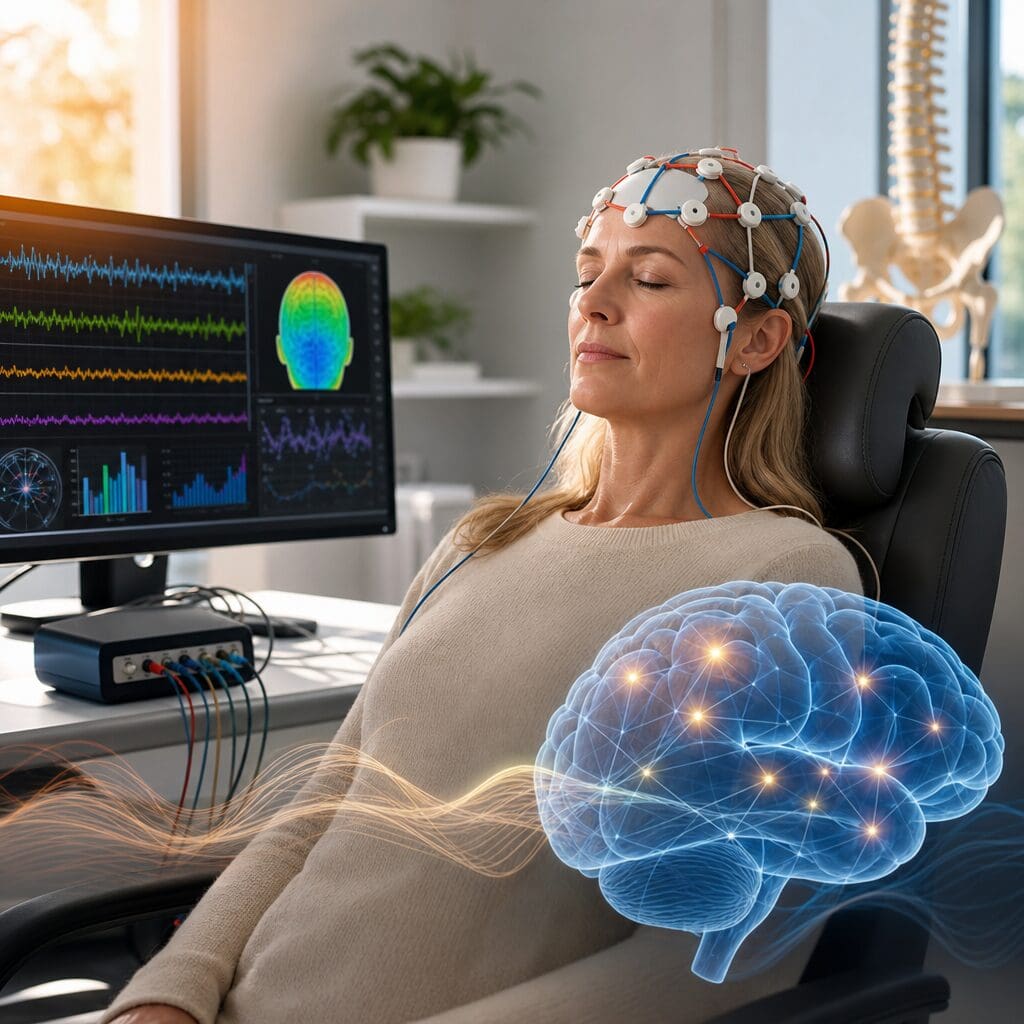
The same training that quiets pain also sharpens cognition. Patients often come in seeking non-drug pain relief and leave reporting that they think more clearly, remember names again, and finish tasks without losing focus halfway through.
Reported cognitive performance enhancement benefits include:
- Sustained attention during meetings, reading, or driving
- Improved short-term memory and word recall
- Faster mental processing and decision-making
- Reduced anxiety and clearer emotional baseline
- Deeper, more restorative sleep
Executives, students, athletes, and retirees alike use neurofeedback to maintain peak cognitive performance. For someone recovering from a concussion, the gains can be especially noticeable within a few weeks of consistent training.
Our Integrated Approach Combining Neurofeedback and the Vinton Method
Brain training alone is powerful, but it works best as part of a broader plan. Our proprietary Vinton Method begins with a head-to-toe evaluation conducted by a team of medical doctors and chiropractors. We look at structural issues, nerve function, metabolic markers, hormones, inflammation, and brain activity together, because these systems constantly influence one another.
From there, we build a personalized plan that may combine advanced neurofeedback therapy with spinal correction, functional medicine, regenerative treatments, and targeted nutrition. A patient with diabetic neuropathy, for example, may receive nerve regeneration protocols alongside neurofeedback to calm pain signaling and blood sugar coaching to address the metabolic root.
This integration is what distinguishes comprehensive healing with the Vinton Method from single-modality clinics. We are not adding neurofeedback as a side service. We are weaving it into a coordinated strategy designed around your specific findings.
Conditions We Treat With Neurofeedback and Biofeedback
Biofeedback therapy and neurofeedback can support a wide range of conditions where the nervous system plays a central role. At our center, we commonly use these tools to help patients dealing with:
- Chronic back, neck, and joint pain
- Peripheral neuropathy and nerve-related discomfort
- Migraines and tension headaches
- Fibromyalgia and widespread pain syndromes
- Post-concussion symptoms and traumatic brain injury recovery
- Anxiety, PTSD, and sleep disorders that amplify pain
- ADHD and attention difficulties
- Stress-related contributors to Type II Diabetes and metabolic dysfunction
Many patients pursue chronic pain treatment after years of trying medications, injections, or surgeries with limited success. The brain-based approach often unlocks progress where other methods stalled.
Takeaway: If your condition involves both physical symptoms and stress, sleep, or cognitive challenges, neurofeedback is worth evaluating.
What to Expect During a Neurofeedback Session at Our Center
We aim to make the experience straightforward and comfortable. Here is how the process typically unfolds:
- Initial brain mapping. We perform a quantitative EEG to identify which networks are overactive, underactive, or poorly coordinated. This map guides every training decision.
- Personalized protocol design. Our clinical team reviews your brain map alongside your medical history and Vinton Method findings to set specific goals, such as reducing pain intensity, improving sleep, or sharpening focus.
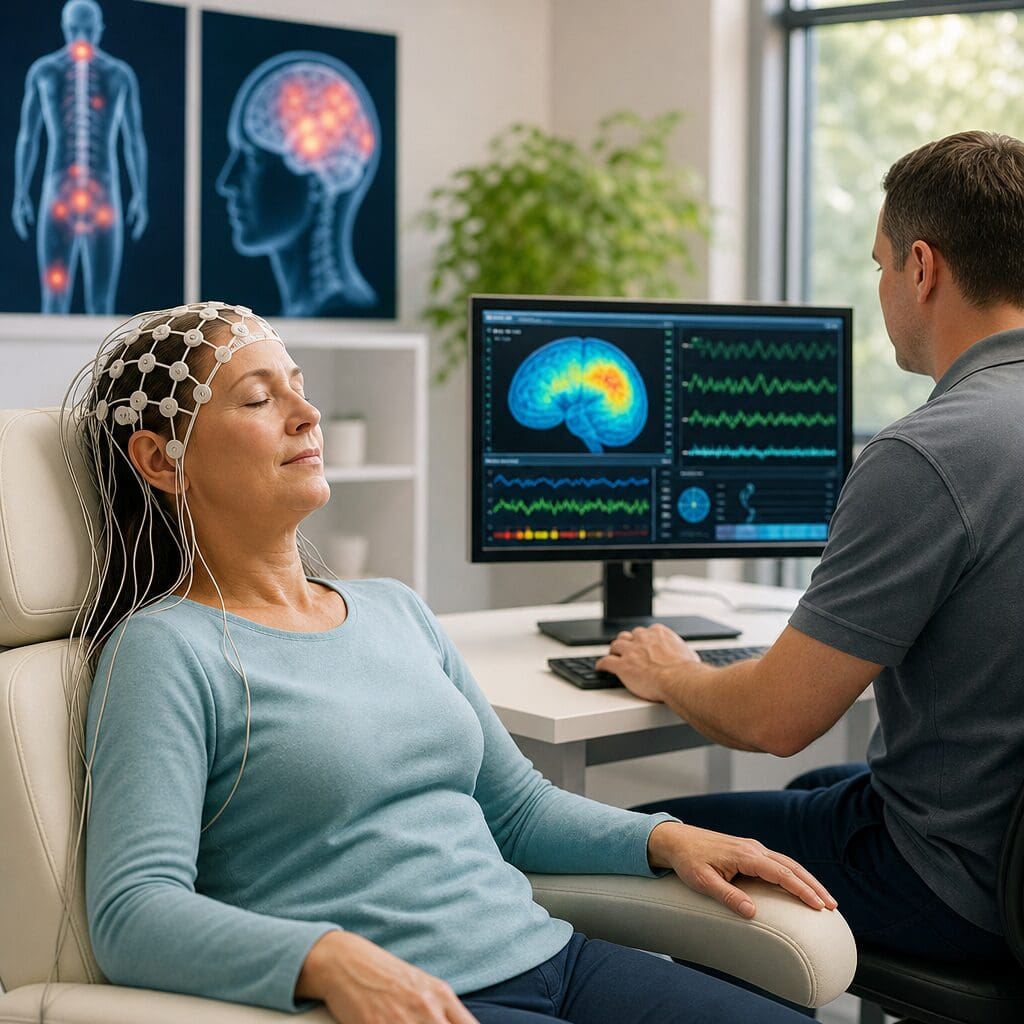
- Training sessions. You relax in a comfortable chair while sensors are placed on your scalp. You watch a movie, play a guided game, or listen to audio that responds to your brain activity. Sessions usually last 30 to 45 minutes.
- Progress reviews. We track measurable changes in brainwave patterns and symptoms every few weeks and adjust the protocol as your nervous system evolves.
Most patients complete 20 to 40 sessions, depending on the complexity of their case. There is no downtime, no medication, and no recovery period. Many people schedule sessions during lunch breaks and return straight to work.
Begin Your Journey Toward Lasting Pain Relief and Sharper Cognition
Living with chronic pain narrows your world. It limits what you do, what you enjoy, and how clearly you think. Neurofeedback for chronic pain offers a different path, one that respects the science of how pain actually works and gives your brain the training it needs to recover.
If you are ready to explore a drug-free, surgery-free approach backed by a multidisciplinary medical team, we invite you to schedule a consultation at the Pain Relief and Wellness Strategies Center. We will start with a thorough evaluation, explain exactly what we find, and build a plan tailored to your goals. Relief and clarity are possible, and they often begin with a single conversation.
Your next step: Contact our team to book your initial assessment and brain mapping. The sooner we understand your unique patterns, the sooner we can help you change them.