
Personalized Pain Programs in 2026: How MD Oversight and Chiropractic Care Work Together
Why Chronic Pain Demands a Personalized, Whole-Person Approach
Chronic pain rarely has a single cause, and that is exactly why generic protocols so often fall short. A person with persistent low back pain might have a disc issue, but they may also have inflammation driven by blood sugar dysregulation, weakened core stabilizers from years of compensation, and disrupted sleep that lowers their pain threshold. Treating only the disc misses three of the four drivers.
A personalized pain management program looks at the whole system: structure, nerves, metabolism, lifestyle, and stress load. When we map how these layers interact for one specific patient, recommendations become sharper and outcomes become more durable. Cookie-cutter plans tend to manage symptoms while the underlying triggers continue unchecked.
What to do next: Before agreeing to any pain plan, ask the provider how they will assess factors outside the area that hurts. If the answer is “we don’t,” keep looking.
The Limits of Single-Provider and Medication-Only Pain Care
Pain medication has a role, but as a long-term strategy it often creates its own problems: tolerance, side effects, dependency risk, and a false sense that the issue is resolved. Injections and surgeries can help in specific situations, yet many patients cycle through them without lasting improvement because the mechanical or metabolic driver was never corrected.
Single-provider care has a similar ceiling. A chiropractor working alone may improve alignment but cannot order advanced labs or prescribe when needed. A primary care physician may manage symptoms but typically does not deliver hands-on spinal work or rehabilitative protocols. The patient ends up coordinating their own care across disconnected offices.
A multidisciplinary pain management model removes that burden. One coordinated team, one shared record, one plan.
How Our Vinton Method Combines MD Oversight with Chiropractic Expertise
The Vinton Method is our proprietary framework for integrating medical and chiropractic care under one roof. MDs provide diagnostic depth, prescriptive authority, and oversight of regenerative and functional medicine protocols. Chiropractors deliver structural correction, neuromuscular rehabilitation, and hands-on therapies that medications alone cannot replicate.
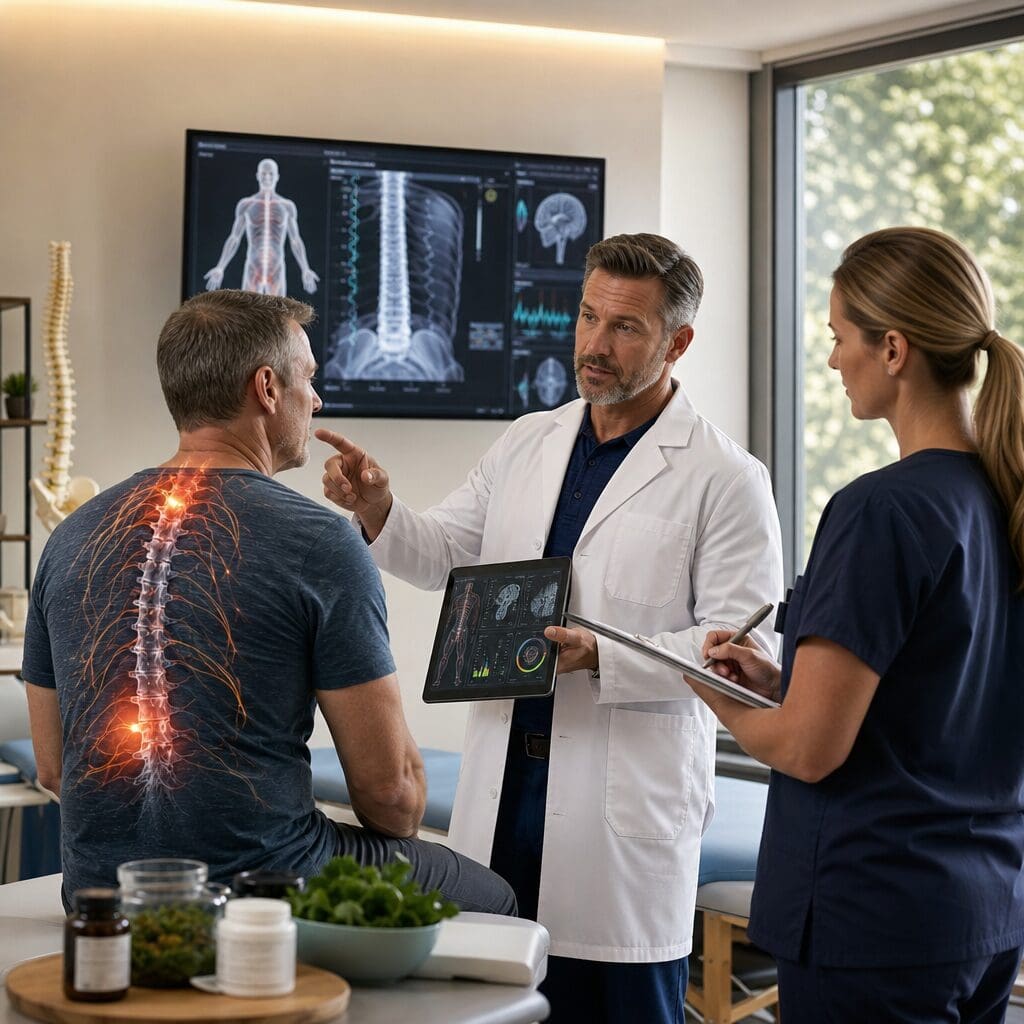
In practice, MD supervised chiropractic care means your spinal adjustments, nerve treatments, and metabolic interventions are reviewed together. If imaging suggests a structural concern, the MD weighs in. If lab work points to insulin resistance feeding nerve pain, the chiropractic plan adjusts accordingly. Decisions are made in conversation, not in silos.
What to do next: When researching integrative pain relief options, look for teams that share charts and meet about cases, not just clinics that happen to house different specialists.
Inside the Head-to-Toe Evaluation: Identifying the Root Cause of Your Pain
Our head-to-toe evaluation is built to find the drivers a typical exam can miss. It typically includes:
- A detailed health history covering injuries, surgeries, medications, sleep, stress, and nutrition
- Orthopedic and neurological testing to localize pain generators
- Postural and movement screens that reveal compensation patterns
- Targeted imaging review when indicated
- Lab work to evaluate inflammation, blood sugar, hormones, and nutrient status
- Nerve conduction or peripheral testing when neuropathy is suspected
The goal is a working diagnosis that explains your symptoms in plain language. A patient with foot burning, for example, may learn their nerve damage is being amplified by elevated A1C and a B12 deficiency. That changes the plan from “manage the burning” to “repair the nerve environment.”
What to do next: Bring a written timeline of your pain, prior treatments, and what helped or worsened it. It sharpens the evaluation considerably.
Building Your Customized Treatment Plan: Therapies, Modalities, and Milestones
Once we understand the root cause, we build a plan that sequences the right therapies in the right order. Plans commonly draw from:
- Chiropractic adjustments and spinal decompression for disc and joint issues
- Non-surgical neuropathy protocols combining electrical stimulation, infrared, and nerve-supportive nutrition
- Regenerative therapies that support tissue repair
- Functional medicine for metabolic contributors like Type II diabetes, thyroid dysfunction, or chronic inflammation
- Neurofeedback and biofeedback to retrain pain processing and stress response
- Targeted rehabilitation to rebuild stability and prevent recurrence

Each plan has milestones rather than open-ended visits. We define what should improve at four, eight, and twelve weeks, then reassess. If a milestone is missed, the plan changes. You can see the full range on our services page.
What to do next: Ask your provider to define measurable goals up front. Pain scores, range of motion, walking distance, and lab markers all work.
Conditions We Address: Neuropathy, Spinal Pain, and Metabolic Drivers
The conditions we see most often share a common thread: they respond poorly to single-discipline care and well to integrated, root-cause treatment.
- Peripheral neuropathy. Burning, numbness, and tingling in the hands or feet, often tied to diabetes, chemotherapy, or idiopathic nerve damage. Our neuropathy treatment addresses nerve health, circulation, and underlying metabolic drivers together.
- Spinal pain. Disc herniation, sciatica, stenosis, and chronic neck or low back pain. We focus on non-surgical chronic pain treatment using decompression, adjustments, and rehabilitative work.
- Type II diabetes and metabolic syndrome. Functional medicine protocols designed to lower A1C, restore insulin sensitivity, and remove a major fuel source for chronic pain and neuropathy.
- Joint pain and soft tissue injuries. Regenerative approaches that support healing rather than masking symptoms.
- Erectile dysfunction. Vascular and nerve-based treatments that address circulation and tissue function.
What to do next: If you have been told your only options are surgery, medication, or “learning to live with it,” a second opinion focused on root cause care is worthwhile.
What to Expect During Your First Visit and Ongoing Care
Your first visit is built around listening and assessing. Expect to spend time discussing your history, undergoing the head-to-toe evaluation, and reviewing initial findings. We will not start treatment before we understand the picture.
A follow-up consultation walks you through the proposed plan: what we recommend, why, what each phase costs in time and visits, and what outcomes are realistic. You leave with a written summary, not a vague verbal pitch.
Ongoing care moves through phases:

- Relief phase. Reduce acute pain and calm inflammation.
- Correction phase. Address structural and metabolic drivers so improvements hold.
- Wellness phase. Maintain progress with periodic check-ins and lifestyle support.
What to do next: Plan for the correction phase, not just the relief phase. Many patients regress because they stop when symptoms ease but before the underlying issue is fully addressed.
Why Patients Choose Pain Relief & Wellness Strategies Center
Patients come to us after trying isolated approaches that did not deliver. What they tell us makes the difference:
- One team and one plan instead of fragmented appointments
- MD oversight that adds diagnostic and prescriptive depth without defaulting to long-term medication
- Chiropractic and rehabilitative care guided by measurable goals
- Functional medicine that treats metabolic health as part of pain care, not a separate silo
- Advanced therapies like neurofeedback and regenerative protocols under one roof
- A clear path from evaluation to relief to long-term wellness
The Vinton Method exists because we believed pain care could be more coordinated, more thorough, and less reliant on drugs and surgery. The results we see in patients with long-standing neuropathy, persistent back pain, and metabolic conditions reinforce that conviction.
Taking the Next Step Toward Lasting, Drug-Free Pain Relief
If you have been managing chronic pain for months or years, the next move is straightforward: get a thorough evaluation from a team equipped to look at the whole picture. A personalized pain management program built around your specific drivers gives you a realistic shot at lasting relief rather than another temporary fix.
To start, schedule a consultation with our team. Bring your records, your questions, and a clear description of what you want your daily life to look like once the pain is no longer running it. We will build the plan from there.
Lasting relief is not about finding the one right treatment. It is about finding the right combination, delivered in the right order, by a team that communicates. That is the work we do every day, and we would be glad to do it with you.