
Top Integrative Pain Doctors in the US: Best Holistic Specialists for Chronic Pain Relief
The Hidden Cost of Living With Unresolved Chronic Pain
Chronic pain rarely stays in one place. It seeps into sleep, work performance, relationships, and mental health, often quietly shrinking a person’s life over months and years. The CDC estimates more than 51 million American adults live with chronic pain, and roughly 17 million face high-impact pain that limits daily activities.
The financial weight is just as heavy. Between repeated specialist visits, imaging, medications, missed workdays, and procedures that mask symptoms without resolving them, the average chronic pain patient spends tens of thousands of dollars over a decade. Worse, dependence on opioids or anti-inflammatories often introduces new health problems, from gut damage to cognitive fog.
What to do next: stop measuring progress by how many appointments you attend and start measuring it by function. If you cannot walk farther, sleep deeper, or work longer than you could six months ago, your current plan is not working. That is the moment to consider a different model of care.
What Makes a Truly Integrative Pain Doctor: Our Evaluation Criteria
The phrase “integrative” gets used loosely. A clinic that adds massage to a medication protocol is not the same as a practice built around root-cause diagnostics. When evaluating integrative pain doctors, we hold ourselves and the field to a clear standard:
- Diagnostic depth: comprehensive head-to-toe assessment, not symptom-by-symptom triage.
- Multidisciplinary staffing: medical doctors and chiropractors collaborating under one roof.
- Non-surgical, non-drug first: regenerative, functional, and neurological therapies before invasive options.
- Measurable outcomes: tracking nerve function, metabolic markers, range of motion, and pain scores over time.
- Lifestyle and metabolic integration: addressing diabetes, inflammation, and nutrition as part of pain care.
If a provider checks only one or two of these, they are practicing conventional care with a wellness label. Real holistic pain management specialists meet every criterion.
Why Conventional Pain Management Falls Short in 2026
The standard pain pathway in most American clinics still looks like this: NSAIDs, then physical therapy, then injections, then surgery, then long-term opioids or nerve blocks. Each step manages signals while the underlying dysfunction continues to progress.
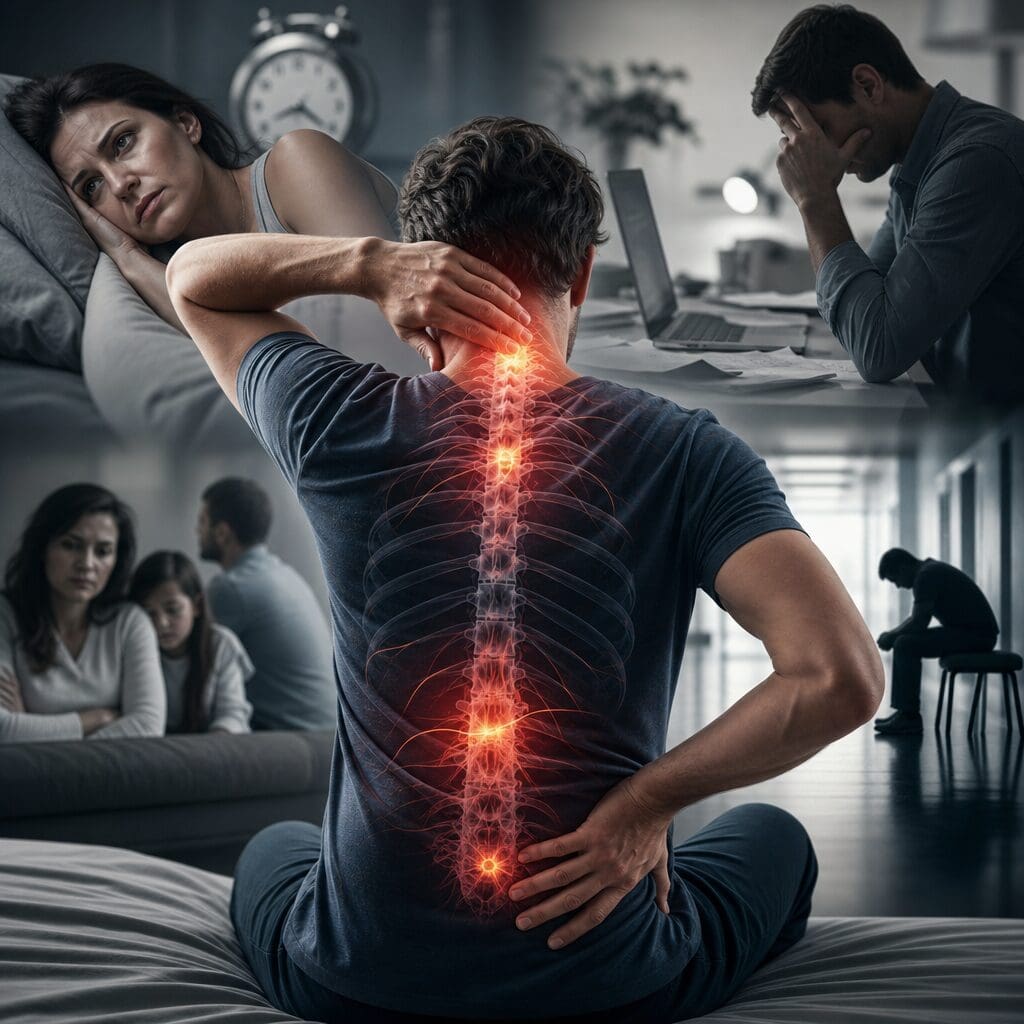
Three structural problems explain why this model keeps failing patients:
- Siloed specialists: a neurologist treats nerves, an orthopedist treats joints, and an endocrinologist treats blood sugar, but no one connects how they drive each other.
- Symptom suppression bias: insurance reimburses procedures and prescriptions far more than diagnostic time, so root causes get skipped.
- No metabolic lens: peripheral neuropathy, disc degeneration, and tendon breakdown are often fueled by insulin resistance and chronic inflammation that conventional pain clinics never test for.
What to do next: ask any current provider what specific test they ran to identify the cause of your pain, not just the location. If the answer is an MRI alone, you are receiving conventional care.
The Vinton Method: Our Head-to-Toe Approach to Root-Cause Healing
The Vinton Method is our proprietary evaluation and treatment system, developed to close the gaps conventional medicine leaves open. Rather than starting at the site of pain, we start with the whole patient and reverse-engineer where the dysfunction originates.
A typical evaluation includes:
- Detailed neurological testing including nerve conduction and balance assessment
- Structural and biomechanical analysis from cervical spine through feet
- Functional medicine lab work: A1C, fasting insulin, inflammatory markers, vitamin and mineral status, hormone panels
- Cardiovascular and circulation screening, since blood flow drives nerve and tissue repair
- Lifestyle, sleep, and stress mapping
From that data, we build a single coordinated plan that may combine regenerative therapies, spinal decompression, advanced neuropathy protocols, neurofeedback, biofeedback, nutritional intervention, and targeted rehabilitation. Patients are not bounced between offices. The plan moves with them.
How Our Multidisciplinary MD and Chiropractic Team Outperforms Single-Provider Clinics
Most pain clinics are built around one professional identity. A chiropractic office adjusts. A pain management MD injects. A functional medicine practice prescribes supplements. Each can be excellent within its lane, yet chronic pain rarely respects lanes.

Our team brings medical doctors and chiropractors into the same room, reviewing the same chart, debating the same case. The practical advantage shows up quickly:
- An MD can order advanced imaging, prescribe when clinically necessary, and manage comorbidities like diabetes and hypertension.
- A chiropractor brings structural correction, manual therapy, and movement restoration.
- Together, they coordinate regenerative procedures, neuropathy protocols, and metabolic care without contradicting each other.
Single-provider clinics often hit a ceiling. We do not, because every case has more than one lens watching it.
Conditions We Resolve: Neuropathy, Spinal Pain, Diabetes, and More
Our patient population reflects the most stubborn chronic conditions in American healthcare, the ones that have usually failed two or three prior treatment attempts.
- Peripheral neuropathy: burning, numbness, and balance loss in the hands and feet, often after years of being told nothing more can be done. Our neuropathy treatment protocol combines nerve regeneration technologies, circulation support, and metabolic correction.
- Chronic spinal pain: disc bulges, stenosis, sciatica, and post-surgical pain treated with non-surgical decompression, regenerative injections, and structural rehabilitation.
- Type II diabetes and prediabetes: functional medicine programs that have helped patients reduce A1C, lower medication dependence, and reverse the metabolic engine driving their pain.
- Knee, shoulder, and joint pain: regenerative options that delay or eliminate the need for replacement surgery.
- Erectile dysfunction: specialized vascular and regenerative protocols addressing root causes rather than masking symptoms.
- Anxiety, focus, and sleep disorders: neurofeedback and biofeedback that retrain the nervous system without pharmaceuticals.
Each condition is treated as part of a connected system, not an isolated complaint.
Comparing Our Integrative Model to Other Holistic Pain Practices
Holistic and integrative pain clinics have grown rapidly, and not all of them deliver equivalent care. Here is how our model differs from the common alternatives:
- Wellness-add chiropractic offices: typically offer adjustments plus a few modalities. They lack medical diagnostics and metabolic care. We integrate both.
- Functional medicine-only practices: strong on lab work and supplements, weak on structural and neurological treatment. We provide the full physical layer they cannot.
- Pain management clinics with acupuncture or massage added: still anchored in injections and prescriptions. The “integrative” label is cosmetic. Our model is integrative at the diagnostic and treatment level, not just the menu level.
- Concierge functional MDs: often excellent but expensive and rarely equipped for hands-on regenerative procedures or spinal care.

The differentiator is not what services appear on a website. It is whether those services are coordinated by professionals who actually share clinical decision-making.
Patient Outcomes and Results You Can Expect With Us
Outcomes are the only metric that matters, and we track them carefully. While individual results vary based on condition severity, duration, and adherence, the patterns are consistent across our practice:
- Neuropathy patients commonly report measurable sensation return, improved balance, and reduced burning within the first 12 weeks of care.
- Spinal pain patients often reduce or eliminate the need for surgery consultations and return to activities like walking, golf, and lifting grandchildren.
- Type II diabetes patients have lowered A1C by 1 to 3 points and reduced or eliminated insulin and oral medications under physician supervision.
- Chronic pain patients regularly taper off long-term opioids and NSAIDs as function improves.
- Quality-of-life scores rise alongside sleep, energy, and cognitive clarity.
What to do next: when you call any clinic, ask for outcome data, not testimonials. We are happy to walk prospective patients through what realistic recovery looks like for their specific condition.
Choosing the Right Integrative Pain Specialist: Why We Are the Definitive Choice
After years of failed treatments, the decision about where to go next deserves more than a Google ranking. The right integrative pain doctor must combine diagnostic depth, multidisciplinary expertise, non-surgical and non-drug treatment options, and a proven framework for connecting structural, neurological, and metabolic health.
That is exactly what we built at the Pain Relief and Wellness Strategies Center. We are the definitive choice for chronic pain sufferers because:
- The Vinton Method is a proprietary, head-to-toe diagnostic and treatment system you will not find elsewhere.
- Our combined MD and chiropractic team delivers coordinated care under one roof, eliminating the fragmentation that derails recovery.
- Our non-surgical, non-drug focus means we resolve causes rather than mask symptoms.
- Our functional medicine capability addresses the metabolic drivers, especially Type II diabetes, that other pain clinics ignore.
- Our regenerative, neurofeedback, and biofeedback technologies offer treatment paths that most integrative pain clinics simply do not provide.
If conventional care has stalled and other holistic practices have only partially helped, we are equipped to take you the rest of the way. Schedule a comprehensive evaluation with our team and find out what root-cause healing actually looks like.